Category Archives: Could be Verse

A Chai Affair

Standard

by Omar Ahmed AlKhulaqi


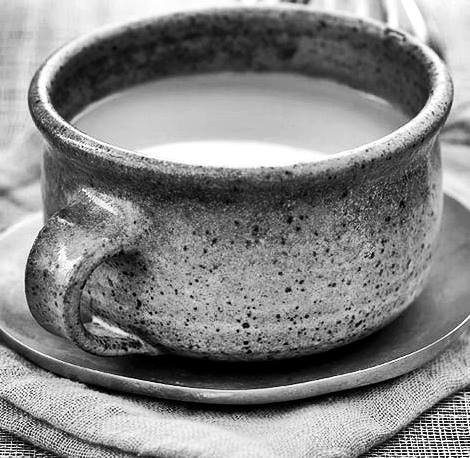
When my lady prepares her tea,

I hear the boiling water spewing,

And like the cup, it streams in me,

The steamed herb of my undoing.

With her wand in circles I go,

Stirring and stirring me down to my soul,

Anticlockwise, suspending time,

I surrender to her design.


Snapping back at the wand’s clink-clink !

The hypnosis ends as she blinks,

I gaze at this spirit of sort,

Our eyes commune where words fall short,

She hands me the potion that scents her hair,

Her chai! O such an intimate affair,

My senses rippling, eager to erupt,

A whiff of my soul, brewed inside a cup.

– Oak

1546291_10152560405751258_1961069776_n

Intimations of old age

Standard

Natural-Ways-To-Cure-Headache-Hot-Cup-of-TeaWhile going through some old papers, like many a writer, I find fragments of things I’ve written over the years, mostly poems, sometimes stories, and sometimes rants. This one is in a melancholy mood, reminding me of my first nostalgic recognition that time was catching up with me and could soon run out.


“Grow old along with me,”  you said

Sipping tea, aromatic with bergamot

Steam rising like a ghost,

I smiled,

Ready to join you on that journey


We ran across

Piano keys playing seconds

Racing up and down the scale

The assonances picked up

Wedding rings and kisses

Children

Sharps and flats.


The melody of spring time

Chased by summer’s desertification

Of our lives

That

And the first grey hair in my mirror.


Forgotten by the time autumn

Had ripened our fruit

Sent dandelion children

Floating on the breeze


Again I fill your cup of tea

Just one now, no sugar

Still bergamot flavoured

With steam

Escaping like warm breath

At the start of winter’s chill.

A challenge

Standard

I received this challenge, ‘create a poem on the following picture’

Unknown

my response:

When Hope was captured in a jar

Pandora set her free

But not before she had unleashed

Every evil that could be.


Some would set a caged bird free

To fly unfettered in the air

And some would say that keeping it

Safe, shows that you care.


But Hope and birds and butterflies

And bats and spirits too

Artist’s hearts and writers’ dreams

Must soar and never rue


The strictures and the structures

Of form and shape and size

They must explore the wider world

Of fiction…

And the poetry of lies.

The Relationship Bazaar

Standard

I was greeted this morning with a Whatsapp message that was really moving and expressed in an almost Gibran-like ‘voice’. It was written in Hindi, and another friend, whose Hindi has fallen into disuse, couldn’t read it as fluently as he would have liked to. So I made a quick and hasty translation.

But, as with a lot of poetry, once something starts buzzing in your head, until you sit down and actually write it it won’t leave you. So, of course I did just that, and here it is:

The Relationship Bazaar

As I was walking in the marketplace

My feet stopped at the Relationship Bazaar.

I looked around and saw it filled

With kinship on sale for near and far


Relationships of every kind

Were offered everywhere

‘Relationships for sale’ they cried

‘Come buy a few to spare’


Each seller had a lively trade

And I walked up to one

‘Aha!’ he cried, ‘What will you buy?

I have everything under the sun!’


With trembling lips I asked the seller

‘How much and what’s for sale?’

With a flourish he said

‘Most everything and some beyond the pale.’


‘What would you like? What will you buy?

I have a wondrous range

Special ties with a son, or father

I have all good, some strange.’


‘Choose from a sister or a brother

Dear shopper what’s your choice?

Humanity or the love of mother

Faith? Pray, where is your voice?’


‘Come, come,’ he cajoled me,

‘Come, come, don’t hesitate!

Ask for something, anything

Your silence on me grates.’


With fear and sorrow in my voice

And with a great unease

I sighed and asked him, whispering

‘Do you have friendship, please?’


He stopped mid-sale, he stopped and stared

As if I’d lost my mind

Then tearfully he turned and said

‘Ah that is hard to find.


‘For friendship is the relationship

On which the world depends

It’s not for sale, it has no price

No price that can be named


For friendship is worth everything

This earth and then some more

It is a pure and selfless thing

And this you can be sure


The day that friendship’s offered

For a price and put on sale

Why then my dear, dear shopper

The world it will have failed


This globe will be uprooted

And lose its orbit quite

The day that friendship’s offered

And can be quoted for a price.

The birth of Corpoetry

Standard

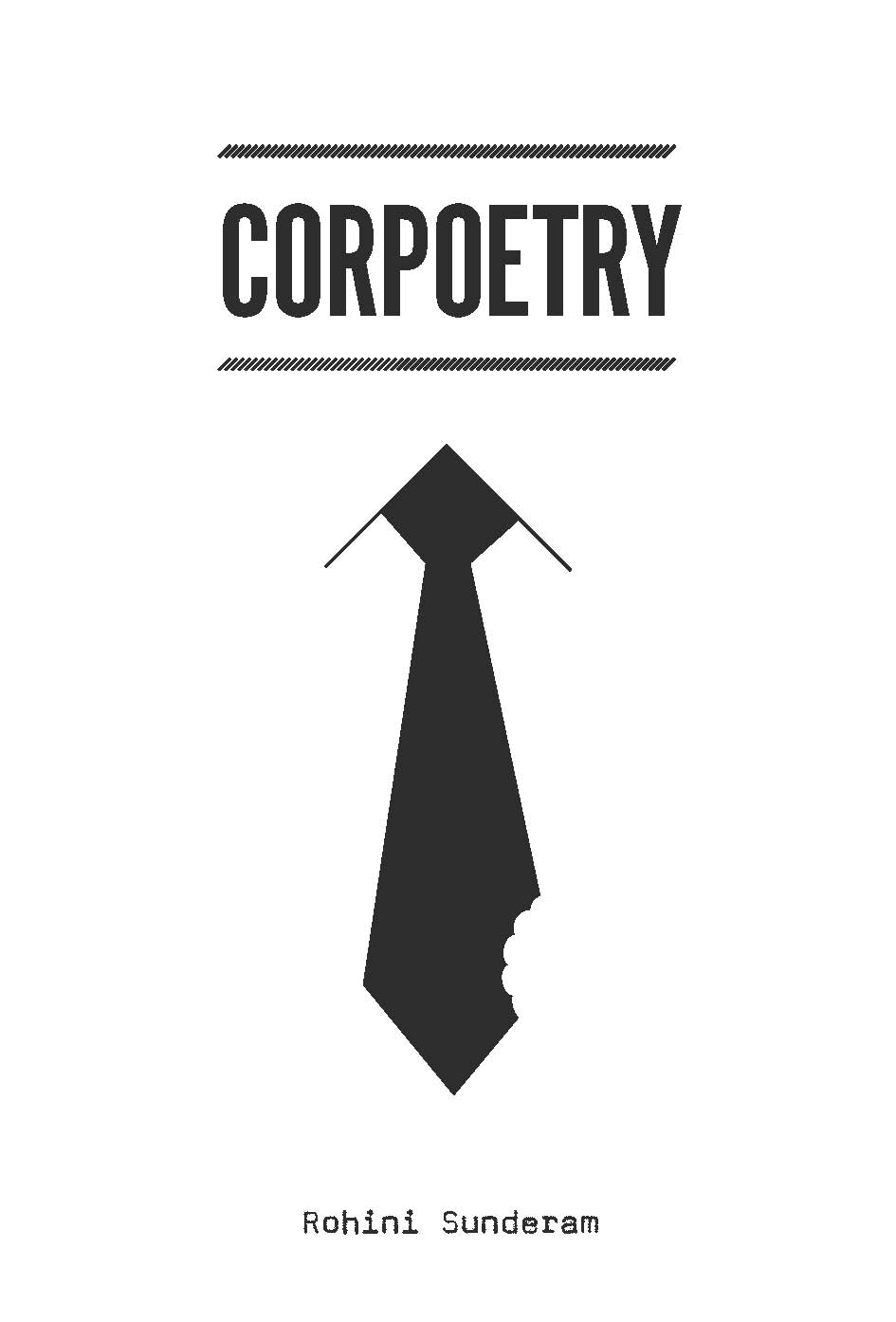
About eighteen years ago a chance remark from a colleague at the Chronicle-Herald, in Halifax, Nova Scotia, sparked off a buzz that has now eventually found expression in a collection of fifty poems that I’ve titled Corpoetry.

We were discussing an ad concept, when we heard that extra boisterous forced laughter that one associates with laughing to please. “Ah!” my colleague and friend said, “Corporate Laughter”. I found the phrase amusing and apt. But it entered that odd space that exists inside our minds where tunes get trapped, phrases beep-n-bop around, lyrics of songs we don’t even like buzz and we can’t get rid of them. So ‘Corporate Laughter’ bumped around inside my head.

I tried to dislodge it by listening to old music. Next I recited old nursery rhymes. Nope. It was still there. Grinning like a gremlin, ‘Corporate Laughter’ it said and hooted into my sleep, my dreams, my quiet space. Nothing helped until I sat down and wrote the first poem in what is my now published collection: Corpoetry. Then, like a deflated balloon it shrank to nothing.

The ‘thing’ didn’t disappear. But, I had found its weak spot – to write it out of my system in a poem – please understand I use the term: poem, loosely. These poems aren’t your highly artistic, searching-for-the-meaning-of-life poems. They’re just fun.

After that, every so often I’d see a situation that gave rise to another poem and then another. During my lunch hour, I’d sometimes use the clip art available and mix and match it with word art to create doodles to complement my poems. I had so much fun doing these that I soon began to see more and more situations, office dynamics, gossip, etc. that gave rise to ever more poems.

And that, dear friends is how Corpoetry began. You can find out more on my Facebook Page.

Corpoetry_cover_Page_02 copy

What makes a poem?

Standard

Please can someone tell me if they see a poem here?

I am not versed, if you’ll pardon the pun, on some of the ‘new poetry’ but honestly the poetic value of the piece here completely eludes me!

After the model is struck by lightning, she becomes really good at yoga. She teaches classes at the small studio by the harbor and afterwards has long talks in the parking lot with her students. She sees the way they stare at her, like any minute something might happen. And they all ask the same questions; they want to know if the current made her body bend better, or if she can feel things about the future. But all she knows is that she was struck by lightning and then she wasn’t. Sometimes she wishes it had done what it was supposed to do, but she has never said this out loud. Her boyfriend makes jokes at parties about how the television reception is clearer now, or how he’ll stand away from her when they walk in the rain. She doesn’t really like him very much anymore. In horror movie storms, skinny bolts of lightning walk across the sky with the shuddering legs of a yearling, but she knows that’s not how it really is. She remembers how it pushed against the night and lit up the sky’s nervous system before it hit her. She remembers how it singled her out. In class a woman who was attacked by a shark shows her a scar that starts at her calf and gets wider as it winds up her waist. It’s the first map of lightning she has ever seen and she can’t turn away. The frayed fault line is like a fossil of electricity, evidence of a fever. In it she recognizes the turn and rip of the current, the break of a bite from nowhere—

Morning blues

Standard

by Patsy Mills

Every day I wake up at nine
My feet hit the floor
A shower cleans me up
Now, I’m doin’ fine

Standing in my closet
Wondering what to wear
I find something decent
and do something with my hair.

A Timmies and a muffin
is on my mind
I reach for my keys to go
But alas, I cannot find!!

I retrace my steps
what did I wear last night?
After minutes of searching
My relief replaces fright!!

Out the door I go
Climb in my car and drive
I hope I make it,
my gas is very low!!

I detour to the gas station
and pour the gas I need
Tim Hortons is right next door
That’s my next stop, indeed!!

My choice is Medium coffee
and a muffin to go,
I wait and I wait,
Oh, the line up is slow!

Believe it or not
this is my morning brunch.
I know it won’t keep me fueled
I will soon be ready for lunch.

After tremors

Standard

Having just finished reading Khaled Hosseini’s And the Mountains Echoed, I recall a conversation I had some years ago in the Bab al Bahrain souk.


‘You know, that guy,’ he says

Between the displays

Of Lapis Lazuli and silverware

‘The one who wrote Kite Runner?’

I nod, my eyes coveting

A single large bracelet

Woven with fine strands of silver

Into exquisitely painful

Circles and arabesques

Imprisoning

A myriad stones

Inscrutable opals, amethysts

As purple as bruises on a tender face

‘What about him?’ I ask

Half caressing the bracelet

And pointing at

A pair of earrings dripping

Blood-red garnets

Set in marcasite.

Thinking, ‘what does he know of

Kite Runner, he looks as though

He can barely read

Selling jewellery in a store

Over-stuffed with shawls, rugs, woodworked boxes

And glitzy

perhaps-these-western-tourists-will-like-them

Waistcoats and table runners.’

Then I see it

Desperation woven into tiny errors

in the embroidery

Startled by a gunshot.

So, I ask again

This time waiting for his response,

‘What about him?

The book was so moving, so violent.’

‘Ta-shakor’ he replies

‘But they were like nothing’

He whispers

Holding the silver bracelet up for me

Quoting a price and adding

‘Like the stories I have in here.’

He points at his head and his heart.

I see half a lifetime

As it leaks out of his hands

Torn fingernails

The intricate patterns

Woven by hard manual labour

Deep cuts on the side

From scrabbling down a mountainside

Hiding in caves

Or was it from protecting his face

Against knife attacks?

As he enters the sale

For the day.

Rebirth

Standard

Shiva’s tandav nritya* the dance of destruction

He the transformer, limitless, omniscient

The holder of time the ultimate destroyer and creator

Man-woman centre of the trinity

Ever moving forward and backward

His cosmic dance

Frenetic in its final phases

We beat the drums and tablas

Dha din din tha, tha din din tha**

Urging him on to our final destruction, hoping to return

To a world reborn, renewed, refreshed

And pure as the first dew on the first day

Of the first dawn.

(*The dance of destruction
** Names of the basic tabla strokes)

First Catch

Standard

I remember the jade green turbulence

Of the river Beas up in the Kullu valley

The summer I turned twelve and discovered rainbow trout.

When papa showed us how to bait the hook

And cast way out and stand on the rocky river bank

Making sure we didn’t stand in it as he did, knee deep in the water.

But on the side, waiting for the tug on the line

On my forefinger held against an already taut string.

Not for us the expensively bought silver flies

Imported from the UK because they didn’t make them here

And children learning to fish could so easily lose them

The Beas is a hungry river and runs almost as quick as thought.

And yet, we learnt to feel the fish as it nibbled squirmy worm

Painstakingly threaded onto the hook

Papa did that because the hooks might hurt our soft girls’ hands.

Stand still and quiet not a word, not a breath

The fish can hear us and will swim away

Instead look at the pines and the deodar silver green

Climbing silently up the Himalayan hillside smirking at us.

We watched them in the hush of nothing but the rushing river

And learnt to feel each breeze, listen to the birds

And the crickets in the growing evening light

And pay no heed to the insect that’s biting my thigh

A stern look from papa because I scratched

And then that creeping thrill when I first felt that other nibble

The one at the end of the line, different from the impatient tug of the river

The rainbow trout was having his last meal.

Tug, tug and reel it in, not all at once but slow

In the excitement I could wait no longer and pulled it all

Rod, line and fish arching over my head in a kaleidoscopic glitter

It caught the setting sun as it flew overhead scattering

Beas water clear as diamonds that came showering down on me

The trout landed on the grass behind

I ran to catch it

Papa at my heels – when did he reel in his line?

Now he was near me so that I wouldn’t try to get my trout off the hook.

Our first catch of the day was all of six inches long

And it was mine.

Palpitating gills and wide eyes.

We put it in a bucket of Beas water to keep it fresh

Later mama fried it along with the others we caught

Right there on the riverside in a pan on the primus stove

Everyone had a bit of my trout

The best fish I ever tasted, salted with success.

Note: The Beas is a river in the northern part of India that rises in the Himalayas and flows for some 470 km (290 miles) to the Sutlej River in the Indian state of Punjab.

Kullu, where my father took us on several fishing holidays, is located on the banks of the Beas River in the Kullu Valley. This valley, formed by the Beas, lies between two cities – Manali and Largi – and is famous for its majestic hills covered with Pine and Deodar Forest. Today, The Kullu valley promotes itself as a popular destination for trout fishing.  It is also the starting point of several trek routes into the Himalayas, white water rafting on the Beas river is also becoming popular. Back in the early 1960’s it was relatively undiscovered and as far as I recall, there weren’t any suitable hotels and so we camped in tents higher up the hill and walked down to the river every day in order to fish.