Tag Archives: Bahrain

An old poem revisited

Standard

As often happens these days I was searching for another poem when I came upon this one. I thought I’d give it a visual interpretation. I hope it works.

Let me know what you think…

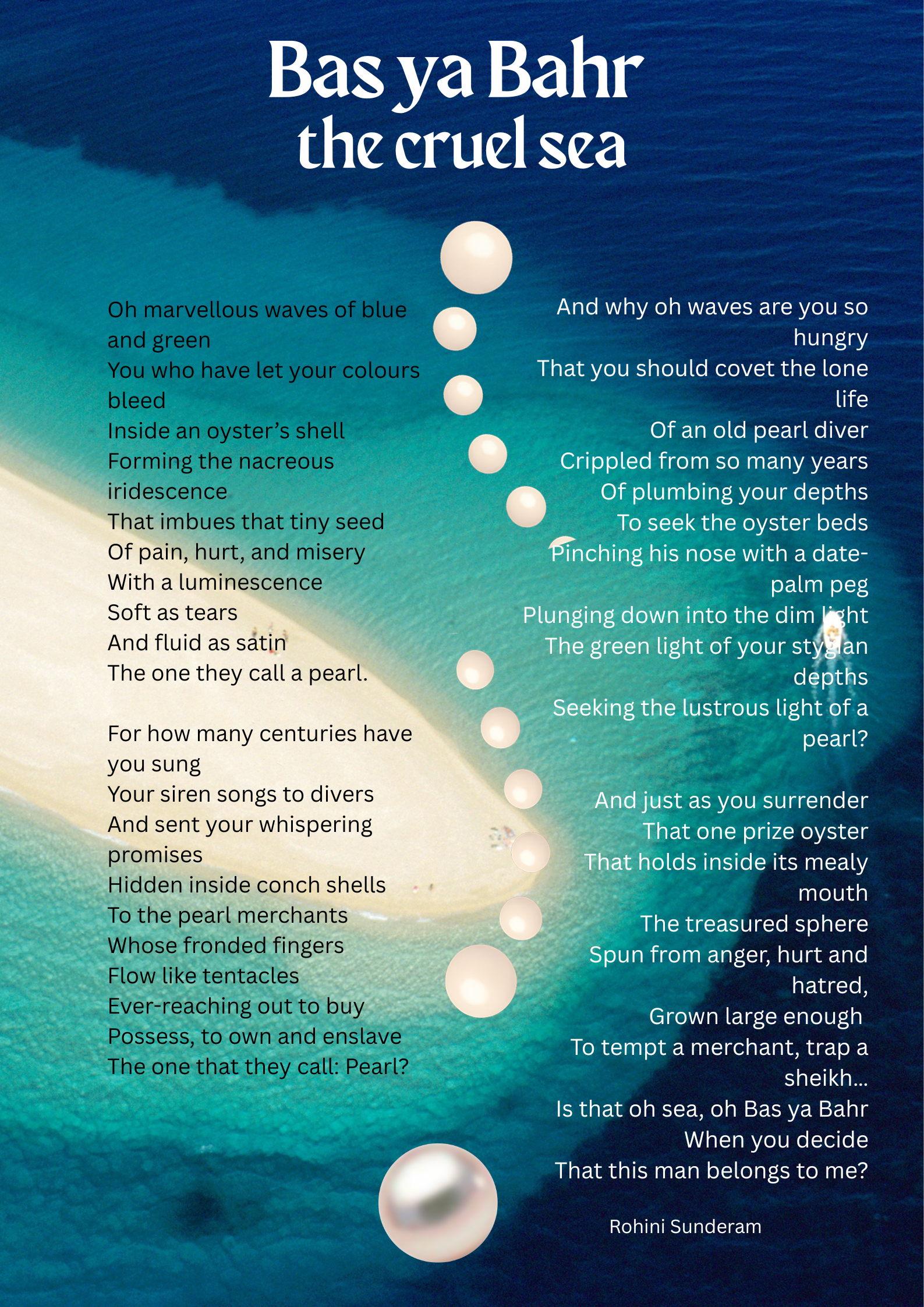
In Bahrain and other parts of the Arabian Gulf, the Pearl divers went out to sea to look for pearls in, what were at the time exceedingly the rich oyster beds located in and around the gulf. It was a hard life and dangerous and much lore surrounded the profession and the songs. This traditional music, known as fidjeri, is an age-old repertory of vocal music sung by the pearl divers of Bahrain, Kuwait and Qatar. The Nahhaam, or pearl diver singers, were backed by a chorus of singers and clappers accompanied by the Mirwas – a small double-sided drum – and the jahlah – a clay pot. 

In 1972, a film by Kuwaiti Khalid Al Siddiq, titled The Cruel Sea – better known by its Arabic title Bas Ya Bahr – related an artistic representation of the pre-oil life of the pearl divers. It proved to be a masterpiece and tells the story of a crippled old pearl diver who tries to prevent his son from taking up the trade because it is so fraught with danger, but the son is in love with a girl from a wealthy family and needs to make money to marry her.  This poem hints at the story and the theme of the film, the sea: treacherous, unmovable, unchanged, eternal and ultimately cruel.

Such a great review…

Standard

I wish it were real

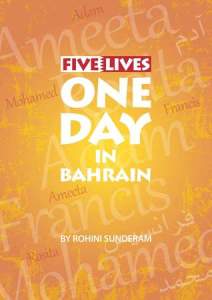
Lately, there have been many, extremely good and detailed reviews for my novella, Five Lives One Day in Bahrain. I wish these people would actually place these reviews on Amazon! Instead they say lovely things abut the book, which they cull from the reading sample, the blurb, and other places. And develop this so-called review, which I and another writer-friend suspect is done using a bot of some kind or another! The individual then tries to lure one into paying the reviewer who will then introduce the book to their real, human, book club… for a fee, of course!

Well, I have decided to use their “reviews” and names (which of course sound totally fake) to share with my readers and followers in the hope that they/you will be tempted to read the book. I do know, from one-on-one comments with friends who have read it that they were moved, thoroughly enjoyed reading it, and connected intensely with the story.

Here’s the review, what do you think?

I recently read Five Lives One Day in Bahrain, and I was deeply moved by the elegant and poignant tapestry you have woven. The premise of your novel is both simple and profound: tracing the lives of five very different individuals, a Sri Lankan housemaid, an Indian garbage truck driver, a Filipina hairdresser, a British banker, and a young Bahraini man, over the course of a single day in 2007. I appreciate the brilliant structural choice to use the five daily Muslim prayer times to “punctuate the different periods in the day and the story’s action.” This not only grounds the narrative in the specific cultural and spiritual rhythm of Bahrain but also provides a universal framework marking the passage of time and introspection. Your intention to create an “uplifting story that celebrates ordinary people in extraordinary ways” is a beautiful and commendable goal, shining a light on the “unsung heroes” whose lives form the backbone of a society.

The novel’s successful establishment of its unique structure and diverse cast prompted a thought about the nature of the connection between these lives, which I share as an admiring reader.

You have masterfully set the stage for a compelling narrative, allowing the reader to learn of each individual’s “lives and hopes” separately, with the promise that they will be “brought together” in a way that makes their lives “intertwine.” This creates a sense of anticipation, wondering how the path of the banker will cross with that of the housemaid, or the driver with the hairdresser. The focus on their individual stories ensures that each character is fully realized before their fates converge.

However, I found myself most intrigued by the potential for their convergence to be more than just a plot device. The most powerful aspect of the story may lie in how this intertwining reveals the invisible, often unacknowledged, web of dependency and shared humanity that connects all levels of a society. To maximize the emotional and thematic impact, the moment of connection could be one that fundamentally alters the perspective of one or more characters, revealing how their lives are already deeply interconnected through the economy, the urban landscape, and the simple, daily acts of service and survival. This would make the “uplifting” conclusion not just a matter of chance encounters, but a revelation of the profound and essential roles each person plays in the ecosystem of a single day, truly celebrating them in an “extraordinary way.”

This is a reflection on the potential for an already beautifully structured and humane novel to become a powerful meditation on empathy, community, and the hidden threads that bind us all, regardless of our station in life. Thank you for this thoughtful and evocative read.

Sincerely,

Cassandra Clere

Birthing

Standard

Rohini Sunderam

ID 221617137 © Partha KarDreamstime.com

The so-called winter in Calcutta pushed the mercury to 25C. One moment the wind was warm, heavy with humidity blasting up from the Bay of Bengal carrying with it a reminder that this had all once been a swampy rainforest. The next moment it sent us a chill message from the faraway Himalayas, it’s still winter.

My belly was large, bulbous, weighed down by the baby. I’d taken to wrapping a shawl around my waist to help support my stomach.  The kicks and rolls, the tiny fist jabbing inside me had gone from a tickle that made me giggle to a physical pain. “Your previous caesarean scars are stretching as it’s growing,” the doctor had explained. 1980 was a time when an ultrasound just confirmed that the baby was okay. We neither knew nor cared about gender. 

The ‘IT’ was the baby. The doctor’s face was implacable. Bedside manners hadn’t become fashionable yet. “Rest”, he advised me. His expression was stern the lines drawn down from his spectacles to his jowls were twin wrinkles, pushed deeper by bulbous cheeks. ‘Too much macher-jhol* and rice’ I thought. Back then patients didn’t make cheeky comments to their doctors. 

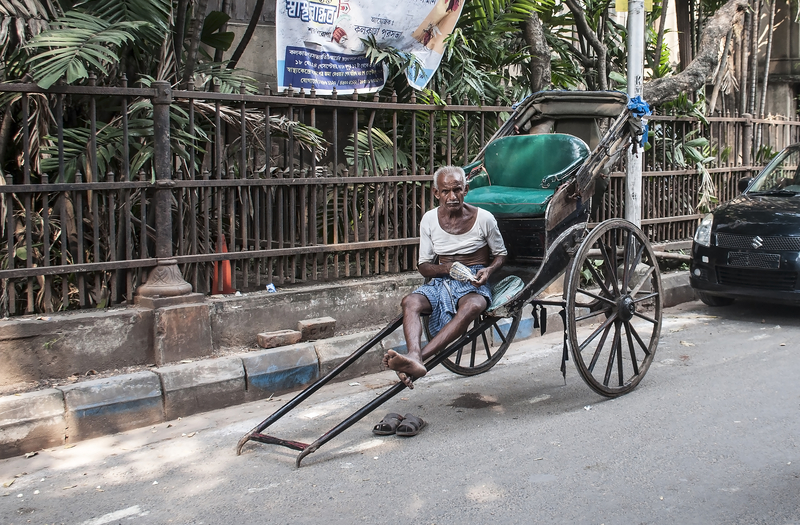
When I limped out onto the street, I was close to tears because getting a cycle rickshaw to take me home at mid-day would be impossible. It was too far to walk and too close for a taxi to bother. I looked around and saw an old hand pulled rickshaw runner. He jangled his single large bell, that looked like the tiny ghungroo bells worn by classical dancers on their ankles. I hadn’t taken a hand pulled rickshaw until then, it seemed so demeaning to them. Reminders of the British Raj, still so omnipresent in Calcutta, were interrupted by a sharp twinge of pain. I grimaced. 

He smiled, waving a fly from his grizzled face. “Daughter, where do you want to go?”

“BBD Bagh,” I said, “How much?” 

He quoted a price. I readily agreed and clambered onto the rickshaw, landing with a thump on the seat as I thanked him profusely.

“I thank you,” he countered, “Not many people take our rickshaws these days, it’s my only livelihood. And many of us must give up the job.” He panted. His slow pace had picked up to a steady jog, “we barely make enough for our daily food.”

I watched his thin sinewy legs as they pumped up and down. His feet were bare and thickly calloused from years of hitting a hot tarmac. 

Guilt, like a monsoon shower, washed over me when he stopped in front of my building. I wanted to make it up to him. “Where do you get your rickshaw bell?” 

He laughed. “Why?” 

“I want it as a souvenir,” I said. 

“You can take this one,” he offered. 

“How will you call your fares?” Tears of remorse pricked my eyes. “What had I done?”

“I have an extra one,” he said, pulling up the seat where I’d been sitting. Under the worn red leather cushion, he had stored his meagre belongings, an almost threadbare grey blanket, rubber slippers, an extra loincloth, and striped underwear. He pulled out the grey, aluminium bell with a leather thong strung through the hoop at the top.

“How much?” I asked. A cool breeze washed past me, a benediction, for my good deed? It cooled the perspiration around my neck.

He laughed, a few teeth were missing, the rest stained red-black with betel juice. His dark sun beaten face and grey beard were almost demonic, but his jet eyes were gentle and the crow’s feet crinkling in amusement made me smile. 

“Whatever is easy for you madam. I bought it a long time ago.”

I handed him thirty rupees, “for the fare and the bell.”

“Madam, it’s too much.” His jet eyes glistened with emotion.

“From the baby and me,” I whispered, “Give me a blessing.”

“Of course, of course”, he said coughing up phlegm which he spat into the street. That was Calcutta. “Live long, daughter, bless you and the baby.”

‘May it be normal,’ I say in my mind. It’s the closest I’ve come to praying in nearly twenty years.

I put the bell into my handbag which I slung over my shoulder. Then, holding my belly under my shawl, I climbed the steps to the door, pushed past it into the cool dark foyer. I pressed the button for the old black wrought-iron lift that clanked on its way down.

I felt lightheaded when I got home and lay down as the various helpers got me water, tea, and turned on the fan. 

When I awoke, I was being rushed on a stretcher past green curtains. My doctor and an elderly lady anaesthesiologist were rushing beside me. I wanted to ask, “what happened?” but my tongue was stuck to my palate, and I couldn’t get any words out. I knew where I was. Had I fainted? Where was my husband? I was in pain; his hand was on my arm. “It’s all ok”. His voice was husky. 

I slept again. Jagged neon lights slashed my abdomen. Pethidine. Is my baby ok?  In the early morning dark, tears burnt my eyes. Until the previous afternoon when I bought the rickshaw puller’s bell, I had abandoned God and prayer. 

I tried to say, “Our Father…” but it stuck in my throat. I demanded of Him, “Give me my baby whole and complete, and I’ll return.” It was a promise. A challenge. Not a prayer.

 “Your baby,” the nurse said, and I took the little girl in my arms. She had a shock of thick black soft hair. I put her to my breast, she sucked hard at my nipple. Her will to live hurt. I examined her fingers, toes, face. She was perfect. 

I reached in my handbag for a tissue and felt the rickshaw puller’s bell, “Your birthday blessing,” I whispered. 

A pink dawn cracked the sky. I looked heavenward, “Thank you.”

(*Macher Jhol – Fish curry)

1ID 197103301 © Michel ArnaultDreamstime.com

The Dance of Life

Standard
The Dance of Life

Class Reunion

Standard

Read & Listen

One after another nine of the stories from my short story collection, Twelve Roses for Love, are being featured by Vachi Audiobooks. This is a unique and refreshing way to listen to or read-along as a story unfolds. As one listener said to me, just close your eyes and let the words flow directly into your mind.

This story presents a mystery. Anita, the main character in our story, has nurtured a soft spot for her old school friend, Jake for many years. He was her secret love. Now, ten years later she is being invited to join the class reunion. She’s apprehensive. Life has been a bit hard on her and although she was once the school beauty she has let herself go. Now, she doesn’t want to attend the reunion for fear that they’ll tease her for putting on weight. And, for fear that Jake, who once seemed to care for her, may not care for her any more.

She meets him… or does she? You decide. Is he for real or a figment of her imagination?

Watch and listen:

Twelve Roses for Love

Standard
Twelve Roses for Love

 I think, JRR Tolkein put it better than anyone else, “I would rather share one lifetime with you than face all the ages of this world alone.” Love is a hundred different things and this little collection that I’ve put together explores twelve different ways in which love enters our lives, defines so many little aspects of it and will, I hope, give you insights into your own love. 

Many of the stories were previously written, Hearts for Valentine was written when my previous publisher, Robert Agar-Hutton, needed a blog post in time for Valentine’s Day. I thought of all the stories that are written about young love and so few about the love that you and I and many other couples experience. Of course, there was that initial thrill and aching depth that we all feel when we first fall in love. But, how many stories celebrate that everyday love that we know? The one that grows deeper with every passing year that we spend with our spouses. That’s how come and why I wrote that one. 

            When I put this collection together, although I wanted it to come out in time for Valentine’s Day, I also wanted to write about ‘LOVE’ as something bigger than romantic love. I wanted to explore the love between sisters, and the funny idea that perhaps inanimate objects could inspire love or maybe even love their human partners. Okay I had a bit of fun with that one, where an armchair looks back on the love he had for his mistress. The story was originally based on a prompt given for one of our Bahrain Writers’ Circle challenges. I must confess it’s a bit titillating! The collection also features four new stories that have not appeared anywhere else.

            Here’s a little excerpt that’s not on the Amazon ‘Look Inside’ feature. It’s a bit of a challenge to you as a reader to guess who the love interest is, in this one. 

FIRST IMPRESSION, FIRST LOVE

She lay there in all her innocent splendour. Virginal white not a single mark on her visage that suggested any other. Never had a bride been quite so innocent of everything. 

There was no suggestion that she had undergone a lifetime of pain. Of being crushed, beaten, and then beaten again. Every ounce of her strength had once been sapped. She had been ripped from limb to limb and then put together again. All those who had been part of her earlier life had been taken from her. And when she was bereft of all support, her captors had thrashed her until there was not a fibre in her being that could hold her upright. That’s when her spirit broke. She wept until she could weep no more. She was drained of all the tears that nature had once given her.

Feedback from a friend: Caught me out! My visualisation went from people trafficking to mannequin to waxwork before you sprung the surprise… 

Available here on Amazon.

Park Bench Stories

Standard

It’s been a while since I had a story to post. This one’s a sequel. Something I haven’t done before. It was sparked by a Facebook post that popped up thanks to their algorithms that remind you of a post three or five or more years ago. This one was called The Park Bench, based on a prompt given by Shauna Nearing Løj. This story has been particularly popular and has twice been released in Spain, courtesy Gerry Wright.

Fast forward to two days ago when a friend from the Bahrain Writers’ Circle, Veronica Selvarajan, read the story and made the comment, “I am going to be wondering if she ever reciprocates….” Well, of course that possibility wouldn’t leave me alone untilI had written the sequel and decided if she’s ever going to reciprocate. Well, Veronica, Cynthia, Charlotte, Joy, Malini, Gerry, Ajoy, Pam, Aruna… and many others. I’ve become a romantic in my old age.

The Guy at the Park

by Rohini Sunderam

She’d never really forgotten him. The young man at the park bench who always asked her if she’d ‘found a young man’. There had been a marked electricity between them. It was palpable through book after book that she read almost every workday afternoon. All he ever did was chew a fresh blade of grass and look up at the sky. There was a quiet confidence in his cocky voice and silence. He lived in the moment. Enjoyed the breeze, the birds in the sky, the clouds, the trees. Over the years they had developed a silent, comfortable, companionship. It was a quiet hour every workday that she kept for herself, before she took the bus home. They had hardly ever even had a conversation. He had grown strong and grown up since that spring so many years ago when they first shared the park bench. She had never learnt his name, nor what he did for a living.

And yet, all these years later, she remembered the look on his face the day she told him she had ‘found a young man’. He wished her well. But his eyes went dull grey like an autumn sky suddenly robbed of the sun.  And something in his face crumpled. But he didn’t say anything to her when she broke it to him. She wondered, ‘was all that electricity just in my head?’ She’d risen from the bench and had disappeared from his life for twenty years in the big city.

Twenty years, she said to herself. Why did I put up with ‘my young man’ for that long! There’d been that early euphoria of being married, being in the financial centre of the country, of looking after a house. But she and Bill had never really had much in common. He constantly wanted to go to this party and that restaurant, spend a fun time with his friends, anything but come home to an evening of quietude, an hour of  reading or listening to music.

He’d come back from work and it was, ‘Right, where are we going tonight?’

Her responses, ‘but I’ve just cooked this lovely dinner, I thought we could enjoy it together,’ were usually overruled.

Occasionally he’d agree and then it was a sullen silence they shared, nothing calm and companionable like it was with the guy in the park. That was a magical hour; the park was a Tom Thomson painting, the colours fixed and immutable. Instead, the meal she had so carefully prepared was wolfed down without a word of thanks and then he’d want to go out for a nightcap. Being a lawyer meant he could afford all that as well as the house. After a few years he went out on his own. Leaving her to her still pool of solitude that bordered on loneliness and her books that transported her on their magic carpet pages to other possibilities.

The miscarriages hadn’t helped either. Her mother had assured her things would improve once a baby or two arrived. After the first two losses, when she felt her world had been wrenched from inside her, her soul and heart shattered into a myriad shards of glass that cut her every time she saw a couple with a baby in a pram, Bill had grown more distant. The doctors said she wasn’t likely to have any more. Bill’s night-time forays became more frequent. Then there was his affair. Secret and sly, sordid and so typically with his secretary. Sinning is hard only the first time, so it wasn’t long before there was another affair and another.  Finally, the divorce and when her mother died, she decided to move back to the small city. The house was hers and she could easily get a job, perhaps even her old job at the library.

It was a cloudy day in November when she thought of going to the park with her book. ‘For old times’ sake’ she said to herself, he’s probably not even there any more. The years had flown like the clouds overhead. She was as nervous as a teenager as she walked in her high boots and her camel trench coat down the path towards where she remembered the bench used to be. It was four o’clock, her usual time from force of habit.

There was a man on the bench. Sitting where he used to sit. He looked at her. Her face implacable she looked at him out of the corner of her eye. She made a small harrumphing sound as she settled in her corner of the bench. He turned and looked at her again. Then he looked away. She was sure it was the guy. The same sinewy arms. That firm jawline and clean-shaven face. His nut-brown hair was streaked with silver. A small smile twitched at the corner of her lips. Then she whispered, “Did you never find a young woman, then?”

His voice was hoarse, as he all but whispered back, “Don’t be silly, I don’t want a young woman…” and then almost inaudible but she caught the last few words, “I only ever wanted you.”

She bent down to pull up a blade of grass, then turned to look at him as twenty summers and winters, autumns and springs melted away like snow. “But you never said anything.”

“What could I say? We hardly knew each other. I still don’t even know your name, young lady!” He grinned and the old cocky look came bouncing into his face.

She smiled, a clean, honest, unguarded smile. “We can rectify that, it’s Louise.” The first fat raindrops began to fall, “what’s yours?”

He grabbed his jacket and flung on the hood, “Al, for Alistair. And we’d better find some shelter soon. Before the wind an’ the rain carry you away, eh?”

“We’d need quite a strong wind to carry me away,” She laughed.

“Oh, aye,” he said like an old friend. He put his strong arm around her waist and they hurried out of the park. She realised he was a good bit taller than he appeared when he was seated. She liked the way his pace matched hers. And then they dashed across the street to a café.

“This should be fine for now.” He said as he led her, still clutching her book and bag, to a table near the window.

For the first time, she was sitting across from him. He had grey-green eyes and that unstoppable slightly amused, cocky expression; crow’s-feet eyes probably developed over the years from staring at the sky. His hands were strong and slightly calloused. ‘What did he do for a living?’

The coffee arrived, hot and steaming with a doughnut on the side. She was grateful for the steam that arose between them. It allowed her to look at him more closely.

“So tell me about yourself,” he said after a long deep gulp of coffee and a swipe of his cuff across his mouth.

“But, I want to know about you,” she said fingering the edge of her book.

“We have enough time for that later. What happened to the ‘young man’ then?”

Between sips of coffee and the doughnuts that the café boasted were amongst the best in the country, she sketched a quick outline of her life. “Now, it’s your turn.” She said.

The cocky smile and the amused look in his eyes deepened. “I’m a plumber by day,” he said.

“And what do you do at night?”  A nervous tremor caught at her throat.

By now he was grinning, “I write.”

“What? Books? Articles? Stories?”

“What kind of books do you like to read?” He asked getting up.

“All kinds,” she replied, “but that doesn’t tell me what kind of books you write!”

“Doesn’t it?” He grinned again. “I really do have to rush now. I’ll see you at the park again, tomorrow?” And he was gone. Striding down the street in the opposite direction of her bus ride home.

‘What do you like to read?’ What kind of a mysterious response was that!

When she got home, she was still mulling over it as she opened her book where she’d left her bookmark. It was another tale of lost love and might-have-beens. Her favourite kind. ‘What do you like to read!’ No! It can’t be. A. Hunt. She’d always assumed it was a woman and there was nothing about the author’s life that suggested plumbing.

-end-
Bombay Monsoon

Standard

Today, the skies in Bahrain are covered in grey bulbous clouds. They look pretty impressive but have only sent down a light, albeit steady, drip. The attempt is a reminder of my years in Bombay and a typical rip-roaring monsoon.

Bombay Monsoon

It was my first experience of that awe-inspiring force of nature – the Monsoon and its annual, passionate affair with the Arabian Sea.  Ms Monsoon flounced in on smoke-grey clouds shot with the gold and corals of a fast-fading sun. Even that celestial superstar turned and ran when Monsoon bore down on Bombay. 

I took one look at the clouds and decided, “I am not going to let those dull grey clouds get me down.”

Off to Colaba I went, walked into the first Monsoon-is-coming-wala shop and bought a red slick raincoat with bright red wellingtons to match. Red Riding Hood on a Bombay street! “Haha” I said, laughing at the storm. “Come down as hard as you like, I am ready to tackle you!” 

Monsoon let fly her tempestuous passion on the hitherto languid sea. Waves seethed in ecstasy frothing and pounding the seashore. Water rushed back up sewers, blew manhole covers and flooded the streets near Bombay Central, where I lived.

Up in Colaba, on higher ground I had no idea of this treachery of the water closer home.  I waited a big smile on my face, wondering why everyone looked so glum! This is magnificent, I thought and caught the big red BEST (Bombay Electric Supply and Transport) bus that would take me home. Three stops before mine, the bus driver refused to go any further.

“How will I get home?” I pleaded with him.

“Not my problem,” he replied.

By now the grey clouds had begun to intrude on my mood.  

There’s only that long that a red raincoat and red wellingtons can cheerily defy a Bombay monsoon. I was determined to continue smiling as I set out at as brisk a pace as wellingtons-squelching-against-a-pavement-flowing-with-rainwater will allow. 

The closer I got to home the deeper the water got.  Soon the water level rose hip high, the wellingtons weighed me down as they filled with water and the raincoat floated around my waist – a red stain in the murky water around me. I had to drag my feet, as by now the weight prevented me from taking the wellingtons off. 

When I finally reached home the ground floor of my building had water sloshing in through the door. I sat on the steps and dragged those wellingtons off tipping them over to empty them of the filth of the streets outside. I should have let them float away.

I kept them both. The red wellingtons stood for a whole year on a mat drying out and were eventually tossed. The red raincoat was worn only occasionally. Reminders that no one tackles a Bombay monsoon with rainwear created in the west. 

They were replaced by the only practical wear: rubber flip-flops and a black umbrella. 

And what did Monsoon say to me? ”I shall decide what you wear,” and the echo of her laughter rumbled as the grey clouds rolled. She was the only one who wore diamonds flashing in her hair, lighting the sky and chasing away the colour

Clap your hands and we are gone

Standard

Flipping through my “work” notes I came upon this poem. Procrastination hits my work assignments too, sometimes. Many were the mornings I’d play a game of solitaire on my computer or do the cryptic crossword to get the cogs in my brain moving. In Halifax a young friend, Crystal, taught me how to do the ‘Cryptoquote’ a good solid brain-teaser, perfect to start the creative juices flowing. And now what do I find among my notes…

We are stardust, we are ephemera
Is that why our lives are so shallow in every way?
Unconsidered, unthought out, unplanned
There was a time when spontaneity
sparkled, lit up our unplanned lives
Today it’s lost its sparkle
Today everything sparkles
Flat, planned permanence and stability
Rock-solidity are spurned
Labelled boring, dull, unexciting
So we chase another dream
And yet another
Flickering flames of fantasy
Chimera
Forever just there
Just out of reach.
And so we are forever running
Like Alice, twice as hard
Not realizing that Time and Space
Run with us
So we get nowhere
Our eyes always on tomorrow
We don’t see today
Nor realise that the here and now
Are a gift
That the ancients called
The present.

Twig & Leaf

Standard

All I need is a compliment… I posted a fragment from this piece on Facebook and one person’s reaction prompted me to reproduce this dramatic little dialogue that I wrote many moons ago when there were fewer high rise buildings in Bahrain, when our apartment in Muharraq looked out to the sea where dhows lounged on the beach and the causeway to the Diplomatic area was a quiet passageway and the country was asleep by ten at night.

A TWIG AND A LEAF

A bird introduced the story. It twittered: “This is the story of leaf and twig. Of self and self. Which destiny is yours dear listener? Which road to dusty death would you take?”

Twig:   “The wind blows and I move.”

Leaf:   “The breeze breathes and I dance. I quiver with its tiniest breath. Silver. Golden green. The sunlight warms me and I glory in its warmth. The moonlight shimmers on me and I play a dainty game with moonbeams. But you, you are stiff and angular. Your movements are scratchy. Scritching. And scratching. And squeaky.”

Twig:   “Just because I am more firmly set it doesn’t mean that I don’t feel the wind or the sun. Or that the silver moonlight does not make dramatic patterns with me. I am strong. And you are weak. Too emotional. Too full of movement. Too light. You dance today. But all too soon that loving sun will make you wilt and you will fall and be crushed.”

Leaf:     “Drop I shall some day. But not before the sun and the wind have caressed me into the most exciting hues of green and yellow and russet, a russet that would rival a sunset. Colours that have made poets sing. What poets have sung of you, Twig?”

Twig:     “No. That is true. No poets sing of me. I am the coarse, unlovely of the world. The bark grows hard around me. It shelters me from the sun and the wind of life. But it constrains me too. Confines the sap that flows within. Warm sap that longs to leaf sometimes. That aches to dance.

And, yet I know that if I were a leaf, I would dread the day when I should fall. Having metamor­phosed from glorious green and yellow on to russet and hectic red. Fall and be crushed. Stamped out. And forgotten. No. I would rather be a twig. And never live or love so much, so close to life that some day I shall, I must be turned to dust, ignominiously…under the foot of some uncaring, unthinking, unloving passerby.”

Leaf: “Perhaps. But twig, dear twig, to love is all. Why should it matter how you leave this world? We must all be crushed and torn some day. So live. Live and love and laugh and dance today!”

Twig:   “No. No. I cannot… And yet, should I? No. I must not. For I support the leaves.”