Tag Archives: Bahrain

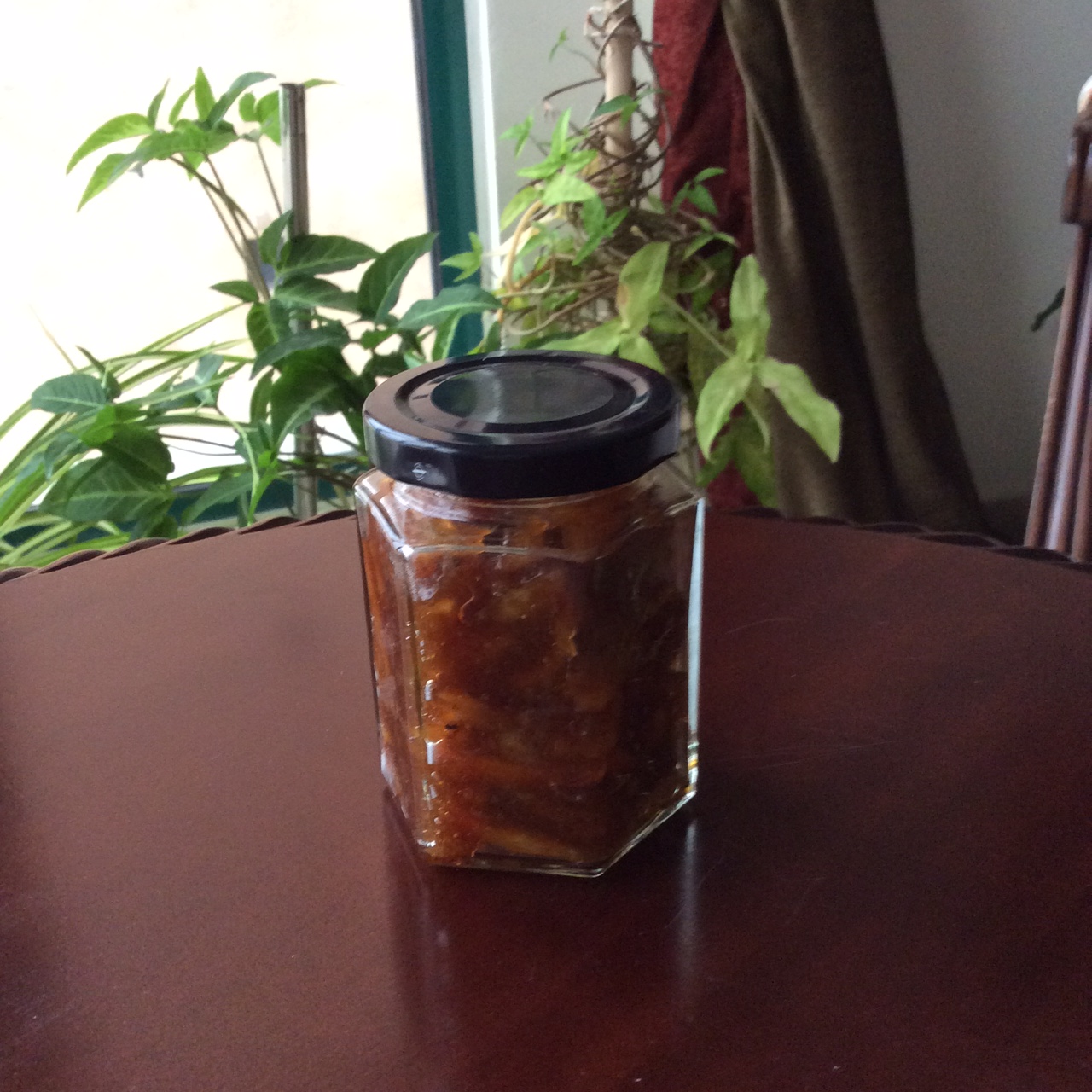
3-Citrus Marmalade

Standard

IMG_0279“Do it by the book,” she muttered as she stirred the three-citrus marmalade. Determined that today, this time, for once, she was going to follow the recipe exactly. Well, almost exactly.

She never did things by the book and was still disgruntled with that silly question she’d asked some friends, the one about the alarm clock in the opening lines. The writers’ remarks were all sensible and supportive, especially the one about “screaming in the face of the editors,” that brought a smile to her face as she stirred. Read the rest of this entry

Memories

Standard

In search of material from the past one comes across a mood that suddenly finds resonance in the present. It’s not prophetic but it stirs an old emotion and I wrote it when I first knew we were going to Canada. I was apprehensive at the time, not knowing then, what I know now, that I was embarking on one of the best times of my life.

Having said that, I feel that those of us who come to the Middle East, even if we put down roots here, imbibe something from the shifting sands that enters our spirits and stirs a restlessness within us that eventually makes nomads of us all. Where, beneath this great dome of sky, will I eventually pitch that tent that never needs to be unpegged again? I have sand in my toes.

A Farewell

Goodbye people of this clime

It’s time to leave you

My watch is over

The grains of rice

Destined for me, are eaten.

No more grains on these plates

Come with my name written on them.


I have drunk deep

Of your waters, and long.

A thirst in my heart

Has been quenched.

And now a gnawing hunger

For other pastures

Feeds at my soul.


I must leave

The writ has been sent

Am I manumitted now?

Or do I go to another master

Another slavery?


The only freedom I yearn for

Is the final escape from life

When I will hunger no more,

Nor thirst.


I see your trees your wastelands

Your messy beaches, your prim hotels

I know your petty interests

Your magnanimous natures

I’ve grown to love them all

And I’ve grown to love them well.


But I must leave now

For I can hear the sirens calling

Midnight beckons

With its own sweet, soft music

Which I must follow

Towards the harsh light

The unforgiving break of day.

Corporate Dance

Standard

It happens in every office. You notice it especially when the first half of the year draws closer to its end. The little dance. The schmooze sessions. The “let’s do lunch!”

These little scenes prompted a poem called Corporate Dance in my collection Corpoetry. See how the ‘chaps’ fall in step with the boss. Watch the ladies sashay along. They’re so in sync that it’s like a choreographed performance. Not Bollywood dancing. This is more subtle. Like a tango. The challenge. The turn your face the other way, but exchange a look. It has all the verve of old-fashioned ballroom dancing and a lot of very clever footwork – both literal and metaphorical.

Putting together the collection of poems that grew into  Corpoetry was so much fun. Once the poems began to flow I couldn’t turn a corner in the offices that I worked in when I didn’t find yet another situation that prompted a poem. Sometimes reading the news – especially during that financial crisis – brought on a poem like Big Cheeses which prompted Bob Cubitt’s wonderful review. I still keep thinking that if you, as a reader, have a situation, do please send it to me and I’ll create a poem for you. Who knows, we might end up with Corpoetry Two!

corp dance

The Sandwich Thief

Standard

Yesterday I read a post on Facebook (someone else’s post) that I then placed on my FB page here: https://www.facebook.com/RohiniSunderamAuthor

The post is an amusing account of two colleagues and a spat they have over a turkey & rye sandwich. I mentioned that it reminded me of some of the poems in Corpoetry, like The Water Cooler. One friend said she’d like to see what I’d make of that situation in a poem.

And so, here it is!

‘Twas in an office, I heard tell

Of a prankster ne’er do well

He stole, it seems, a colleague’s lunch

And the outcome was a bunch

Of laughs for folk like me and you

But from the posts, it seems ‘twas true

And this is how it went:


“Oh sandwich thief, I know you keep

Stealing my sandwiches, why oh why?

The latest one’s turkey on rye.

Grow up you thief, you sandwich thief!”


The thief replied, “dear Turkey ’n’ Rye

I have it here, I do not lie,

Ten bucks is all that it will take

To get it back upon a plate.”


The victim lashed back with a threat:

“Return my sandwich, thief, or else!

To HR I shall take my ‘plaint

And then let’s see how you will faint!”


The Sandwich Thief, did threaten back

“Alas, my dear, alas, alack!

For every hour that you delay

Bite by bite, I’ll eat it away.”


Threats then turned to psycho chat

“Why oh why are you doing this?”

The sandwich ‘napper, not remiss

“Tick-Tock” he sent a photo back.


But in an office, as we know

Don’t push your luck for it can go

As in this case, to HR’s top

And HR weighed in with a ‘Stop!


“Cease! Desist! Return the food

And we’ll not take this any further”

But sandwich ‘napper he’s a boob

Demands a pizza, silly joker.


Next he adds an insult in

Threatens not to eat but chew

And then in little mouthfuls spew

The sandwich in a bin!


“You’re the worst” our Victim sighs

“I’m not” Our Sandwich Thief replies

And in eloquent prose outlines

The corporation’s ills and its demise.


Now, thanks to IT and what not

HR tracked down the wicked sot

“Francis!” they name and shame the chap

“Come and see us, now ASAP!”


Now Sandwich Thief, he ain’t so bold

(In fact it almost makes one sicken)

“Please don’t fire me,” he folds!

The turkey made him chicken.


The Pearl Divers’ Songs

Standard

The following is an excerpt from an essay with poems that was published in Robin Barrat’s More of My Beautiful Bahrain

As gems, pearls hold a particular fascination for me. They come in a myriad shades and colours. When they occur naturally, they are formed by an accident. A tiny grain of sand, a little pebble, enters an oyster shell and irritates the mantle. In response the mantle secretes nacre to cover the irritant and in doing so creates a pearl. What a wonderful thing to do! What a beautiful response to an irritant. Instead of destroying the unwelcome guest, the oyster lovingly encases it to create one of the world’s most prized gems.

I can’t help think, that in some ways that’s a bit like Bahrain.

At one time the area referred to as Bahrain extended as far north as Basra and down to the Omani coast in the south1 its capital being Hajar1 . I had heard of Basra pearls even before I came to the Kingdom. So the mystique and magic of the island where the pearls came from, as well as the fact that this was the place where oil was discovered in the Middle East, added to the aura around Bahrain or as they called it, more accurately in the old days: Bahrein. That being closer to the meaning, two seas.

Long before oil became the mainstay of the region, Bahrain’s main source of income was its pearls. And, if certain sources on the Internet are to be believed, the region, if not the country, was ‘historically where the world’s best pearls came from.

As I understand it, fresh water aquifers beneath the seabed in Bahrain, contribute to the unique quality of Bahraini pearls. What made and continues to make Bahraini pearls particularly precious is the fact that back then the natural pearls of Bahrain were found and collected by ‘breath-hold’ divers. In addition, the pearl-diving season was short, lasting just over four months from June until early September.

The way it was done was that the divers would pinch their noses with a short peg made from the stem of a date palm leaf. They would then be let down on a weighted rope, remain submerged for about a minute, during which time they were able to harvest an average of eight to twelve oysters. These they would put into a bag, tug the rope and they would then be drawn up by the puller – a strong hefty man, who remained on the boat. After a number of dives one lot or divers would return to the boat to rest and recover while another lot were lowered to the oyster beds. Divers were not paid wages, instead they received a share of the profits from the sale of the pearls.

Given the nature of the work, the setting sail and staying away for around four months of the year it is not surprising that a unique and traditional music was developed that was exclusive to the pearl divers. This traditional music, known as fidjeri, is an age-old repertory of vocal music sung by the pearl divers of Bahrain, Kuwait and Qatar. The Nahham, or pearl diver singers, were backed up by a chorus of singers and clappers accompanied by the mirwas – a small drum – and the jahlah – a clay pot.

At one time Kuwait had, in its sound archives, some of the best collections of recordings of these aboriginal songs and music. These were sadly destroyed in the First Gulf War during what was called the ‘Fires of Kuwait’.2

To quote Bill Badley – an expert on middle eastern music especially as it relates to the Oud – ‘This music, strange and distant as it seems, is the most vivid recollection of the lifestyle of the pearl divers, singing praises to Allah, sometimes erotic poems, sometimes hymns to the sea; and with it we are able to imagine the boats and the annual pearl diving seasons, the rudimentary but elaborate pieces of clothing used by the divers that preceded the modern diving suits by many centuries, and perhaps conjure up images of the pearl divers – their hopes and dreams and their fears of the sea as well as their life, long before the oil economy.’

Water pollution resulting from spilled oil and indiscriminate over-fishing of oysters essentially ruined the once pristine pearl producing waters of the Gulf. Today, pearl diving is practiced only as a hobby. Still, Bahrain remains one of the foremost trading centres for high quality pearls.

While researching the songs of the pearl divers I was so moved by some of the material that I felt I had to write something about them. I have tried to capture the rhythms and movement of the gentle waves of the Arabian Gulf in my poems as well as subtly echo the strong drumbeat that was at the centre of the songs. In one of them I have imagined a mythical old pearl diver grown large and titanic in size beneath the waves rising one night and to his horror discovering the cause of the decline of the pearling trade – ‘cargo ships and oil tankers’, and in another I have asked the world at large and the powers that be in the Kingdom to resurrect the beauty of both pearling and this traditional music.

And here are two poems that are adaptations of the original songs,

Pearl Divers’ morning prayer

(Adapted)

Today again I sail out to dive

To the deepest blue of the sea below

Today once again you know I’ll strive

For a pearl, a pearl that I can show.

So heave you rowers heave, I say

Today is that day, today is that day!


O morning sun, come bless our dive

Make fortune smile on us today,

Pardon our sins and bless our lives

In the name of Allah, we do pray.

So heave you rowers heave, I say

Today is that day, today is that day!


Your mercy is unlimited, Lord

And from our sins we’ve turned away,

And so we pray that you afford

A following wind and a clear, calm day.


So heave you rowers heave, I say

Today is that day, today is that day!


Pearl Divers’ evening prayer

(Adapted)

From the depth of the sea

I have risen O Lord,

Twice times ten I went down below.

The date palm peg it held my nose

The weights on the rope,

They anchored my toes.


We thank you O Creator

That you have made our lives so easy.

We thank you O Creator

For making a generous sea.


Our riches and hopes and prayers

O Lord, they come from you.

Today we bring good tidings

To our neighbours and families.


The sun, the sea and the wind

O Lord, they sting my hands and skin.

But these are like nothing, O Lord

When we see the pearls within.


Reference:

1 Manama People & Heritage by A. Karim Al Orrayed

2Reference: David Douglas’ Film ‘Fires of Kuwait’ / Bill Badley Wikipedia
 

Desert Flower blooms!

Standard

As with so much of my writing, a chance remark, a question, a comment, often sets me off and before I know it, usually out comes a poem, sometimes a rant, sometimes a story.

And that’s how I came to write Desert Flower.

I had just started working at the Chronicle Herald, we were based in Dartmouth at the time, when I was surrounded by some colleagues all mildly intrigued by me. I guess I was something of a curiosity. The fact that I was “from away” in itself was strange. India, they had all heard of. But, Bahrain! “Where on earth was that?”

Some colleagues told me they couldn’t comprehend the heat I was talking about. And there I was, in the throes of trying to wrap my mind, my arms and my shawl (worn over my sweater, further fortified by stockings on my feet) around how cold it was and that was the middle of May.

“So, how hot does it really get?” One colleague asked me.

I started to explain it to him and then I thought. ‘I’m a writer. Why don’t I write it down for him.’ So that day over lunch, I started to write. And before I knew it, this romance story, jumped on me, like a devil on my back and every lunch hour for the next two weeks I simply had to bash out this story. Until it was done.

By then it was June. The story had gone galloping off in its own direction, so of course the colleague who’d asked the question never saw this. But I did share it with some of my other colleagues who thoroughly enjoyed it. It was too long to be a short story and too short to be a novella so it lay with me until I returned to Bahrain and shared it with some of my young Bahraini colleagues.

“You have to publish it”, they insisted.

“How do you know about so many of our old traditions? Like the ‘mashata, the dallal…”

“These are being forgotten…”

Finally, I was able to publish it. But that’s why, the opening lines are…

How can I explain that sort of heat to you?

Dry. The air so hot you can hardly breathe. The sun: a high, burning, intense fire in the heavens. You can’t look up to see it. It is shrouded in a heat haze, so that although one is aware of a single heat source, the entire dome above seems like a pulsating radiator reflecting that relentless heat back to the baking earth below.

In such a land nothing lives, save a few daring palms that would cheat the heat, and not let it extract their moisture by thickening their trunks and shredding their leaves, or scrub trees, those tenacious acacias – gnarled and thorny, husbanding their water and sap, even their chlorophyll into the tiniest imaginable leaflets – extracting from the unforgiving environment more cleverly than Shylock, life. In this inexorably cruel environment, is it any wonder that trust is a precious commodity, almost as valuable as water?

And love? It is a rare jewel. It lives as the cactus flower, bright, showy and flamboyant, but only for a brief while. It is a thumbing of the nose, from that plump succulent stem with its spiny leaves, at the heat and wasteland around it.

Such was the love that I had found so very long ago on a tiny island, just east of Saudi Arabia, called Bahr’ein, because of its two seas, the salty one that flowed around it and the sweet water sea that lay hidden both underground and beneath the seabed. So much like us, we who call ourselves Bahraini, with our salty and crusty exteriors hiding the sweet softness beneath.”

You can read the rest at any of the links provided at my publisher’s page here: http://www.ex-l-ence.com/Desert-Flower.php

As for the pen name? Ah, that’s another story.

aaa-bookshelf-119g

…a very special Lady graces my blog today… Authoress and Poetess Supreme… Rohini Sunderam…

Standard

Thanks to Seumas Gallacher, intrepid blogger, writer, speaker, Scots…

Seumas Gallacher's avatarSeumas Gallacher

…at the risk of repeating previous blog openings, I’m the most fortunate of bloggers inasmuch as my terrific Guests come from all corners, and in all guises… since this ol’ Jurassic arrived in Bahrain, I was invited to join the excellent Bahrain Writers Circle

bahrain wrters circle

…started a few years ago by Robin Barratt, who still offers great support from his home base these days back in the UK, the group has gone from strength to strength on the broad and willing administrative shoulders of David Hollywood and Rohini Sunderam… David is an accomplished Poet in his own right, and may appear at some time on this ‘ere blog…. meantime, the effervescent Rohini offers splendid illumination to my page… let me stand aside and allow her to speak for herself and her unique CORPOETRY collection…

Corpoetry_cover_Page_02

From Corporate Laughter to Corpoetry

Rohini Sunderam

This collection of poems came into…

View original post 983 more words

David Hollywood of Bahrain Confidential reviews Corpoetry

Standard

David Hollywood, my friend and fellow poet from the Bahrain Writers’ Circle (BWC) has the happy post of being the resident poet for one of Bahrain’s best known lifestyle magazines, Bahrain Confidential. David, as all of us in the Second Circle Poetry Group know, is an impassioned and accomplished poet with his book Waiting Spaces available in both print and Kindle editions. And, of course he has been writing poetry for Bahrain Confidential for several years now.

You can imagine, I was overjoyed when Bahrain Confidential told me that he was going to review Corpoetry, my collection of poems published by Ex-L-Ence Publishing. I was also a little intimidated. Now that I’ve seen his review – which I hope you’ll check out – I am absolutely and utterly delighted.

David and I share approximately the same vintage, so he picked up on references that were old hat but which I’ve explained in notes to those who are of a younger persuasion. The one poem that he, and a number of others, particularly enjoy is Big Cheeses.

Which poem or poems resonate with you? Do let me know. Also, if you’re inclined, do please send in a corporate situation and I can create a poem for you. If you prefer to write your own poem, leave it here in the comments section where it can be featured.

Here’s the review!

Feb-Book-Club-470x330-470x330

With the link: http://www.bahrain-confidential.com/home/bookreview-corpoetry-by-resident-poet-david-hollywood/

Enjoy! And once again thank you David Hollywood


The Lament of Gilgamesh

Standard

This poem was written when I was in Bahrain in the 1980-90s. The Legend of Gilgamesh has fascinated me for quite a long time and continues to do so.

For those who don’t know it, here’s a quick run-down garnered from Wikipedia: The Epic of Gilgamesh is a poem from Mesopotamia and among the earliest known works of literature. Scholars believe that it originated as a series of Sumerian legends and poems about Gilgamesh king of Uruk – which is in present day Iraq.

The story revolves around a relationship between Gilgamesh and his close friend Enkidu, with whom he undertakes many dangerous quests that incur the displeasure of the gods. In one of these quests the two friends kill the Bull of Heaven and so to punish them the gods have Enkidu killed. The latter part of the epic focuses on Gilgamesh’s distressed reaction to Enkidu’s death, which takes the form of a quest for immortality. In this quest Gilgamesh tries to learn the secret of eternal life by undertaking a long and perilous journey to meet the immortal flood hero, Utnapishtim and his wife, who are among the few survivors of the Great Flood, and the only humans to have been granted immortality by the gods. Gilgamesh comes to the twin peaks of Mt Mashu at the ends of the earth through the mountains along the Road of the Sun. He follows it for twelve “double hours” in complete darkness. Managing to complete the trip before the sun catches up to him, Gilgamesh arrives in a garden paradise full of jewel-laden trees; in another legend this is the place referred to as ‘Dilmun’.

Gilgamesh notices that Utnapishtim seems no different from himself and asks him how he obtained immortality. Utnapishtim tells an ancient story of how the gods decided to send a great flood – very similar to the Flood in the Bible and Noah’s Ark. The main point seems to be that Utnapishtim was granted eternal life in unique, never to be repeated circumstances. After instructing his ferryman to wash Gilgamesh and clothe him in royal robes, Utnapishtim prepares to send him back to Uruk. As they are leaving, Utnapishtim’s wife asks her husband to offer a parting gift. That’s when Utnapishtim tells Gilgamesh of a boxthorn-like plant at the very bottom of the ocean that will make him young again. In some stories it is the pearls that are considered the “grapes of the sea” that will grant immortality. Gilgamesh obtains the plant by binding stones to his feet (very similar to how the early pearl divers of Bahrain used to descend to the sea bed) so he can walk on the bottom of the sea. He recovers the plant and plans to test it on an old man when he returns to Uruk. Unfortunately, when Gilgamesh stops to bathe, the plant is stolen by a serpent, which sheds its skin as it departs. There is a lot more and it is a far more complex epic than I have placed here.

In the Epic, Gilgamesh returns to Uruk, however, in my imagination, he never really leaves and the following poem draws on several myths around ancient Bahrain, using different names by which it was or supposedly was known – Dilmun, Tilmun, Nidukki, Kur-ni-tuk. Those interested may explore these further through that wonderful resource the Internet.

South, south he rushed

To the midst of the sea

To the place of the rising sun

To the place where some day

A king would live like a fish

Twelve double hours away.


The fifth king of Uruk was Gilgamesh

Descended five times from the time of the flood

And son of the goddess Ninsun

He sailed for a day

He sailed for a night

He sailed in search of Dilmun.


He wished to eat of the grapes of the sea

Those pearls from its bed would grant him

Eternal bliss and companionship

With the sage king Utnapishtim

In legendary Dilmun

In twice-blessed Dilmun.


Twice blessed by the god of sweet waters

Twice blessed by the god called Enki

So south he rushed south by southwest

And he met with a following wind

Until he came upon this jewelled isle

(A sad, far cry from Sumer).


Here the date palms stood tall sentinels

Their green arms stretched to the sky

Waving a warning from dusk until dawning

That this idyll would soon pass by.


But he heeded them not brave Gilgamesh

For he had reached the isle of his dreams

Then Gilgamesh dropped anchor

And entered the waters green

Where betwixt the salt through the seabed rose

The sweet waters of Bahr ein.


With stones on his feet down, down he dived

To the rocks where the pearl beds lay

He closed his eyes against the salt

He pinched his nose with a date palm peg

While he harvested those pearls of rose and grey

Harvested the grapes of eternal day

In the twice-blessed waters of a tiny bay

Off the island of Muharraq near Bahrain

Off the waters green that spread between

Muharraq and Bahrain.


How long he stayed beneath the waves

Neither he nor the sages could tell

But he took many shapes beneath the seas

Once a dugong shy then a dolphin spry

Then a shark then a dolphin again

And he sang a song a lament forlorn

Of what he saw had been done to Dilmun

And this was its burden long:


“Ah me Dilmun, Tilmun!

What became of your bearded palm trees green?

What became of your shingled shores?

What became of your soft undulating sands?

Of the burial mounds of your immortal clans?

Who has broken these temples and laid them bare

So that emptied and hollowed and ravaged they stare

At the sky and the taunting sun?

Ah me Nidukki!

Did the oil then come?

As Mesopotamia of old had foretold?

And is it true Kur-ni-tuk

That your pearls you forsook

For the sake of the black, black gold?”


And at night when a full moon is in the sky

And a Sambuk is sailing silently by

Old sailors at their fish traps say:

If you hear the shudder of an oil-tanker

Start up on a night such as this

Emanating from the sea comes a moan and a cry

And the lament of Gilgamesh.

In a Bay off old Muharraq

Standard

This poem was submitted to Lucid Rhythms – an online magazine – and when he accepted it, that was the first time I began to hope that there were still venues that would accept ‘rhyming’ and metric poems.

I don’t know the journey that the genre has taken ever since I last studied it, but in my humble – and not so elevated opinion – any art that needs excessive analysing and interpreting and that can’t or doesn’t connect with people is somewhere missing the point.

In a bay off old Muharraq

Lies an ancient wooden Sambuk

That still goes out on moonless nights

Searching for th’ eternal light

And the master of the Sambuk

Who’s the master of that Sambuk?

A ghost, a wraith, a memory

Singing songs like Fidjeri.


And who is it that sits beside him?

Playing on the double hand drum?

Drumming on the mirwas lightly

While the Sambuk skips so spritely

Across the waves out to the sea

Recalling ancient memory?

Why he too is a distant past

That’s lost forever, lost alas!


And what is it they hope to find

Tossed along by wind and mind?

Why it’s the lulu treasured pearl

‘Durrat’ more prized than any girl.

And so the divers scythe the waves

Seeking what we all so crave

To bury hatred, soothe the pain

So we can all be one again.


And all who live upon this isle

Wherever he or she may come from

Join together, hug and smile

And truly say, “Salaam alaikum.”


Note: Fidjeri is an old Arabian Gulf/ Khaleeji pearl divers’ song, mirwas is the double handed drum that pearl divers used on their dhows (like the Sambuk) the lulu is the word for pearl in Arabic and Durrat is a particularly highly prized pearl. Muharraq is the second major island of the archipelago that constitutes the Kingdom of Bahrain. The poem is not political but expresses the desire to recreate a more friendly unified time in Bahrain. Salaam alaikum means ‘peace be upon you’.