Tag Archives: monsoon

Bombay Monsoon

Standard

Today, the skies in Bahrain are covered in grey bulbous clouds. They look pretty impressive but have only sent down a light, albeit steady, drip. The attempt is a reminder of my years in Bombay and a typical rip-roaring monsoon.

Bombay Monsoon

It was my first experience of that awe-inspiring force of nature – the Monsoon and its annual, passionate affair with the Arabian Sea.  Ms Monsoon flounced in on smoke-grey clouds shot with the gold and corals of a fast-fading sun. Even that celestial superstar turned and ran when Monsoon bore down on Bombay. 

I took one look at the clouds and decided, “I am not going to let those dull grey clouds get me down.”

Off to Colaba I went, walked into the first Monsoon-is-coming-wala shop and bought a red slick raincoat with bright red wellingtons to match. Red Riding Hood on a Bombay street! “Haha” I said, laughing at the storm. “Come down as hard as you like, I am ready to tackle you!” 

Monsoon let fly her tempestuous passion on the hitherto languid sea. Waves seethed in ecstasy frothing and pounding the seashore. Water rushed back up sewers, blew manhole covers and flooded the streets near Bombay Central, where I lived.

Up in Colaba, on higher ground I had no idea of this treachery of the water closer home.  I waited a big smile on my face, wondering why everyone looked so glum! This is magnificent, I thought and caught the big red BEST (Bombay Electric Supply and Transport) bus that would take me home. Three stops before mine, the bus driver refused to go any further.

“How will I get home?” I pleaded with him.

“Not my problem,” he replied.

By now the grey clouds had begun to intrude on my mood.  

There’s only that long that a red raincoat and red wellingtons can cheerily defy a Bombay monsoon. I was determined to continue smiling as I set out at as brisk a pace as wellingtons-squelching-against-a-pavement-flowing-with-rainwater will allow. 

The closer I got to home the deeper the water got.  Soon the water level rose hip high, the wellingtons weighed me down as they filled with water and the raincoat floated around my waist – a red stain in the murky water around me. I had to drag my feet, as by now the weight prevented me from taking the wellingtons off. 

When I finally reached home the ground floor of my building had water sloshing in through the door. I sat on the steps and dragged those wellingtons off tipping them over to empty them of the filth of the streets outside. I should have let them float away.

I kept them both. The red wellingtons stood for a whole year on a mat drying out and were eventually tossed. The red raincoat was worn only occasionally. Reminders that no one tackles a Bombay monsoon with rainwear created in the west. 

They were replaced by the only practical wear: rubber flip-flops and a black umbrella. 

And what did Monsoon say to me? ”I shall decide what you wear,” and the echo of her laughter rumbled as the grey clouds rolled. She was the only one who wore diamonds flashing in her hair, lighting the sky and chasing away the colour
This is wonderful

Standard

The rains in Chennai have been devastating. The stories and news of one disaster after another including, among other things, the exorbitant price of milk, lack of drinking water, the litany is long and for the moment looks like it has no end.

However, as often happens at times like this there is good news too. The news of people helping people. In spite of everything, here’s a story that was shared on my email that was truly heartwarming.

Here is the email, reproduced from the original,

From Biju Verghese The Spirit Of Chennai

While the entire nation is debating on the “Non-sense” called “Intolerance”, there is humanity at its best in Chennai. I can tell this for sure because, I stay in Qatar and my family (wife and 2 kids aged 11 and 7) are in Chennai. With all the floods and problems, I am getting the message from them, “We are safe”.

 In the wake of calamity, Chennai is “One”. It  has only one religion, “Humanity”; It has only one enemy, “Water”; there is only one aim “Help”. And they did it in style. When they were offering help, they didn’t ask whether you are “Hindu” or a “Christian” Or a “Muslim”. They didn’t ask whether you are “Rich” or “Poor”. They didn’t ask whether you are a “Tamlian”, “Malayalee”, “Telugu”, “Kannadiga” or “North Indian”. Only one question they asked; “Do you need any help?”

 The rich people; my neighbors who never interacted with anybody in the neighborhood in last 4  years; opened the gates of their huge house. The man stood outside and welcomed people to his house. “We will eat whatever we have. We will share whatever we have. You can stay here until the water recedes”; that all he had said.. He accommodated around 35 people in his house. He is a Hindu Brahmin. He provided mat for the Muslims to do Namaz. He allowed Christians to pray in his Pooja room.

 There were volunteers outside helping people to reach safe places. They used anything and everything as tool; until the army people reached. Once the experts came, they gave the leadership to the more experienced and helped them to help others.

My wife told me that, there were group of people going through the streets with neck deep water and asking “Sir / Madam, do you need any help?” In front of every house. They provided whatever help they can and they distributed food and essentials. There were groups providing cellphone batteries for 5 minutes to anybody who want to talk.

 I have seen people fight for food when there is a calamity. Even the most modern countries, when there is a calamity, people fight for food. They think only about themselves at that time. But, when the food was distributed in Chennai, it was calm. People stood in queues and they have given food for the people who are not able to stand in queues (elderly, mothers and kids). They brought boats. They made temporary rafts and just went on helping people. On top of all these things, this is what my kids are seeing. This is what they are learning. How to help each other at the time of need. It goes straight into their brain. The images gets implanted there. And then, when there is another calamity, they know what to do.. How to survive. How to get help and how to help others… This is what I want my kids to learn.. Humanity, without boundaries….There is no wonder that, Chennai is one of the oldest cities in the world. It has survived everything thrown at it.. It will definitely remain so for ever. They are united. They can beat anything.. They can survive anything… I am a proud Chennaite… I will never forget this in my life! A city which gave me and my family safety in the hour of need.. Thank you Chennai!.. Thank you Indian Army! Thanks you India!!!

I remember more than 40 years ago there was a flood in Mumbai (worse than usual) and we saw the same thing: people in neck deep water helping others with inflatable tire inserts if one couldn’t swim.I was there and this happened to me, this is no third person account! I could swim but the water was filthy like you wouldn’t believe.

It is true, when a major calamity hits I think most people rise to their highest level of humanity. And that is comforting to see and know. My son was in New York during 9/11 and the support and fellowship shown by so-called hardened New Yorkers blew him away. We saw the same in Japan a few years ago. It really is wonderful to be able to post a ‘feel good’ story right now.

God bless everyone in need. And may God help us all.


Of cows, Indian cities and a story that’s yet to be told

Standard

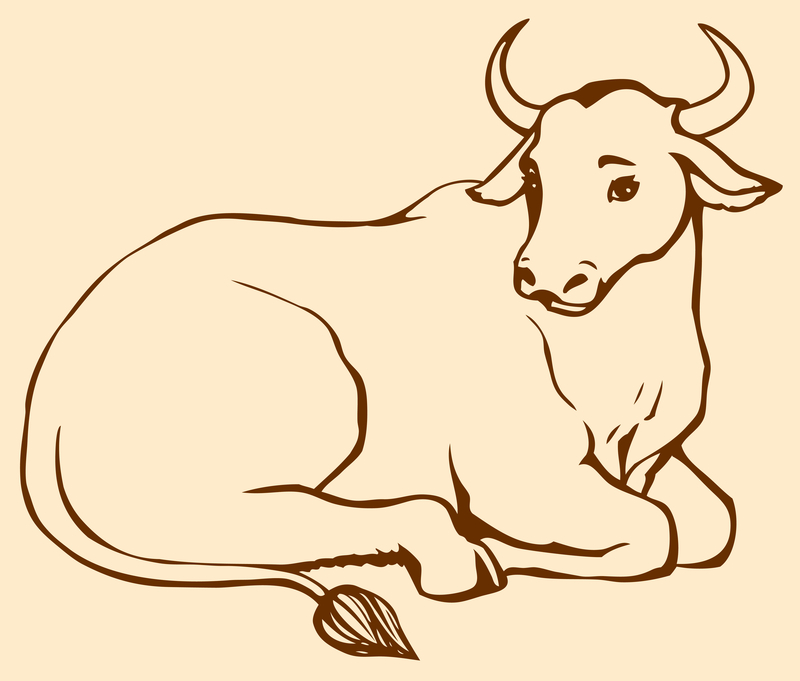
This is a children’s story that I wrote a very long time ago. I have been trying to find a publisher, ideally in India, who’d be willing to publish it as a stand alone. It’s not very long and I’m sure that with the right illustrator it would be a delightful read for children all around the globe. It’s not a traditional folk tale but has been narrated as if it were.

Here are the opening paragraphs… Tell me what you think. What’s more, ask your children or grandchildren what they think. Would they want to know more about this story?

WHY THERE ARE COWS IN INDIAN CITIES

As anyone who has been to India may have noticed, even in large cities like Bombay or Mumbai as they now call it, New Delhi, Chennai, Kolkata in fact all over India, in cities and towns there are cows in the streets.

The cows are everywhere: on the roads, standing on pavements, nuzzling their heads in garbage heaps, lying on the side of the road, chewing cud. Sometimes they just stand and blink at the passing traffic. Sometimes they walk across the road. And, when they do that all the traffic comes to a respectful stop. And sometimes they just stand and stare at passersby with a look to remind them of something that happened a very long time ago.

Now, as every boy and girl, man and woman, has sometimes wondered, you too might ask, ‘why are there so many cows in big cities in India?’ And you might think, shouldn’t they all be in the villages and out in the fields? And shouldn’t they eat something other than scraps and straw and old paper? They should. But Indian cows are very clever and adaptable.

What’s more, many years ago they did only stay in and around the villages and never even so much as wanted to go to the cities. But, those were the days when there was only one cowherd for all the cows and buffaloes in India. His name was Govinda.

Govinda was a young man with a merry twinkle in his eye and a ready song at his lips. Sometimes he played a flute, and it was the most beautiful sound as it danced lightly like a butterfly over the cows and buffaloes as they ate grass, or sat and chewed the cud or slept. All the cows and buffaloes loved Govinda and he loved them.

The cows and buffaloes spoke to Govinda in a language quite different from ours. Whenever they needed him they would lower their heads and call out, “Gooooovinnnnndaaaa!” And he would come running as fast as he could, hopping, skipping and jumping over the backs of the cows if necessary. He could run very fast, there were some who said he could run almost as fast as the wind.

Govinda and his cows wandered wherever their fancy took them. If the cows wanted juicy green grass, Govinda would run ahead, pluck out a stalk, chew it from the roots to test if it was juicy enough and then he’d call the cows to follow him. When they moved in the direction they were called, the enormous herds looked like a great monsoon storm that was changing direction.

dreamstime_s_40282446