and memories

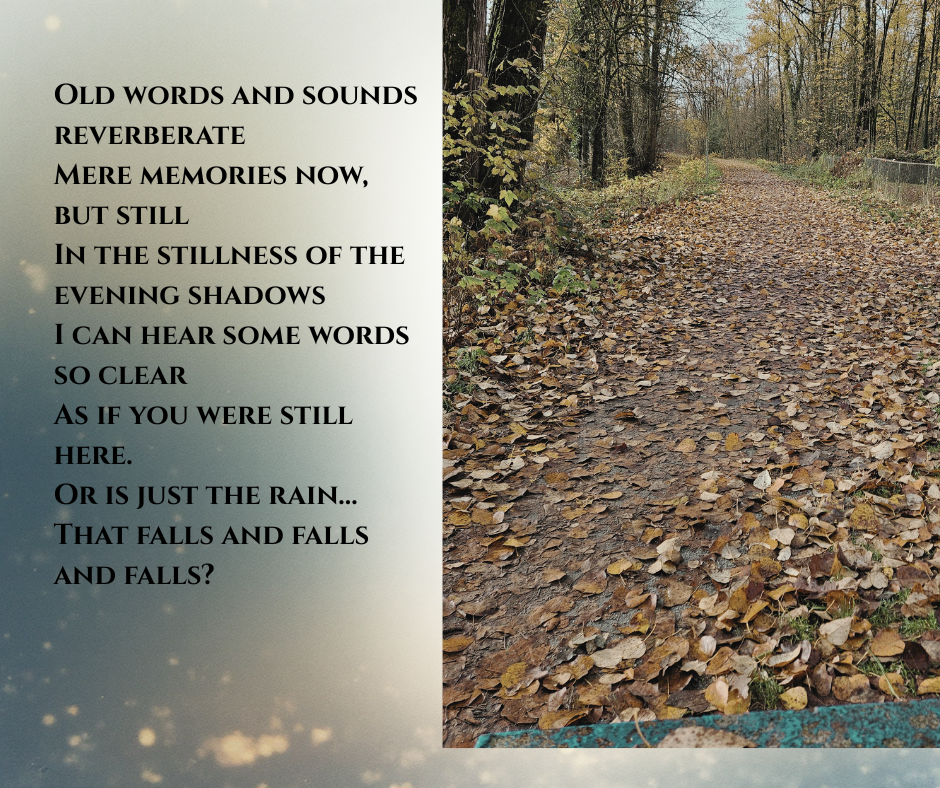
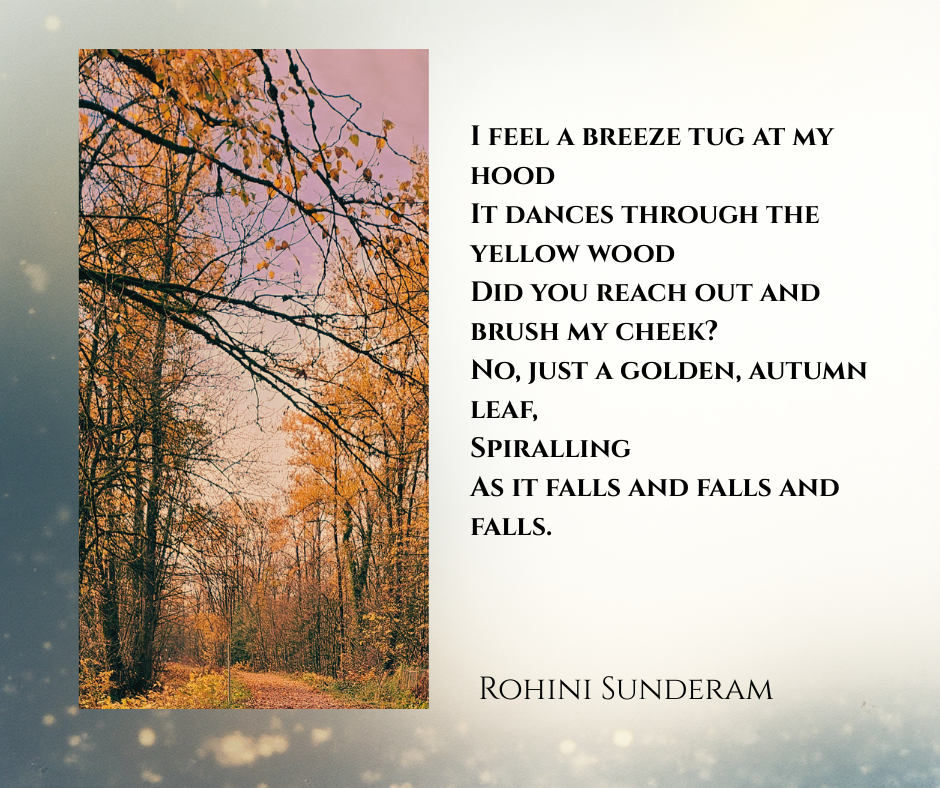

I have often wondered about many of the minor characters in the Bible especially the New Testament. As some of my friends may know I have written about some of them. The last was about the woman with the bleeding sickness: Mark 5: 25- 34 you can read that poem here: https://www.classicalpoets.org/if-i-could-but-touch-his-hem-a-poem-by-rohini-sunderam/
For the past few days this thought has been buzzing in my head. How did Joseph feel? After all he was a man in a strongly male-oriented society. He was marrying a woman who was already ‘with child’. He agreed. But he must have had doubts. Was he being conned by this whole ‘immaculate conception’ story? So here it is. What do you think?
My Lord, my Lord, I know I’m old
And duty-bound to thee
To the virgin Mary, I am sold
The Queen of Galilee?

How can she a virgin be
My Lord, I ask of thee
The child she bears, she claims,
Is yours, my Lord, how can this be?

And am I then a cuckold fool
Oh Lord please answer me
Or dare I hope that I’m a tool
In your plan for eternity?

I need a sign my precious Lord
Please give a sign to me
We’re walking through a green orchard
And now she wants cherries.

Oh Lord, I swear, in rage I swear
Oh Lord, forgive me, please
“Let the father of the baby, dare
To gather your cherries!”

Oh Lord, I thank you Lord indeed
For now, before my eyes
The tallest branch it bends to feed
Cherries, until she sighs.

Her cravings are then satisfied
I thank you, Abba Lord
For now, I know she is your bride
Of that I am assured!

And through this earthly journey, then
My wife she shall remain
For somewhere in your vast, great plan
My name a place will gain.

And I shall take a backward stance
For salvation’s in her womb
I’ll never take a backward glance
For her sorrow’s in His tomb.

My role is merely as a dad
A constant figure, true
Another rock, for that I’m glad
My thanks, dear God to you.
As often happens these days I was searching for another poem when I came upon this one. I thought I’d give it a visual interpretation. I hope it works.
Let me know what you think…
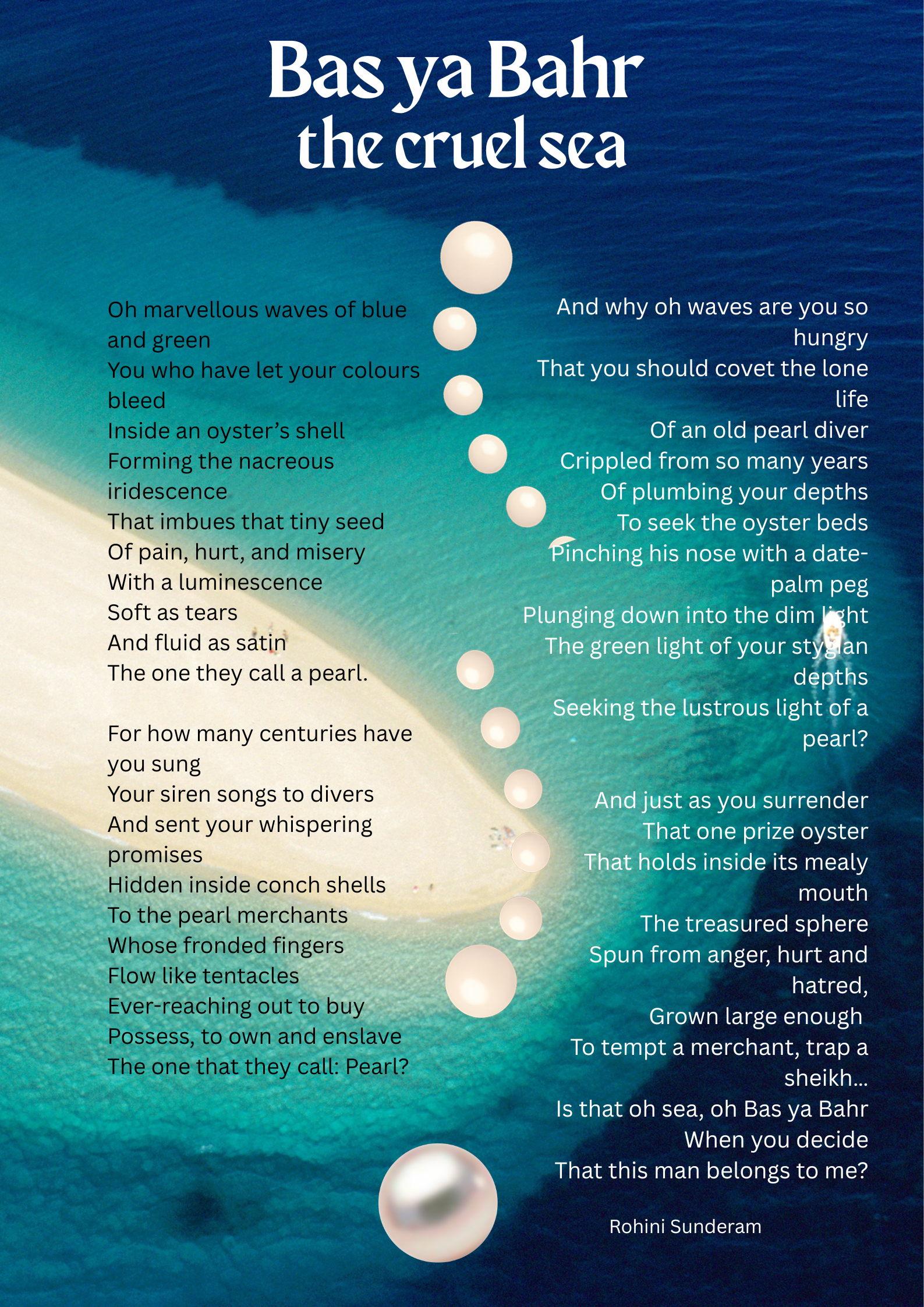
In Bahrain and other parts of the Arabian Gulf, the Pearl divers went out to sea to look for pearls in, what were at the time exceedingly the rich oyster beds located in and around the gulf. It was a hard life and dangerous and much lore surrounded the profession and the songs. This traditional music, known as fidjeri, is an age-old repertory of vocal music sung by the pearl divers of Bahrain, Kuwait and Qatar. The Nahhaam, or pearl diver singers, were backed by a chorus of singers and clappers accompanied by the Mirwas – a small double-sided drum – and the jahlah – a clay pot.
In 1972, a film by Kuwaiti Khalid Al Siddiq, titled The Cruel Sea – better known by its Arabic title Bas Ya Bahr – related an artistic representation of the pre-oil life of the pearl divers. It proved to be a masterpiece and tells the story of a crippled old pearl diver who tries to prevent his son from taking up the trade because it is so fraught with danger, but the son is in love with a girl from a wealthy family and needs to make money to marry her. This poem hints at the story and the theme of the film, the sea: treacherous, unmovable, unchanged, eternal and ultimately cruel.
Rohini Sunderam
The so-called winter in Calcutta pushed the mercury to 25C. One moment the wind was warm, heavy with humidity blasting up from the Bay of Bengal carrying with it a reminder that this had all once been a swampy rainforest. The next moment it sent us a chill message from the faraway Himalayas, it’s still winter.
My belly was large, bulbous, weighed down by the baby. I’d taken to wrapping a shawl around my waist to help support my stomach. The kicks and rolls, the tiny fist jabbing inside me had gone from a tickle that made me giggle to a physical pain. “Your previous caesarean scars are stretching as it’s growing,” the doctor had explained. 1980 was a time when an ultrasound just confirmed that the baby was okay. We neither knew nor cared about gender.
The ‘IT’ was the baby. The doctor’s face was implacable. Bedside manners hadn’t become fashionable yet. “Rest”, he advised me. His expression was stern the lines drawn down from his spectacles to his jowls were twin wrinkles, pushed deeper by bulbous cheeks. ‘Too much macher-jhol* and rice’ I thought. Back then patients didn’t make cheeky comments to their doctors.
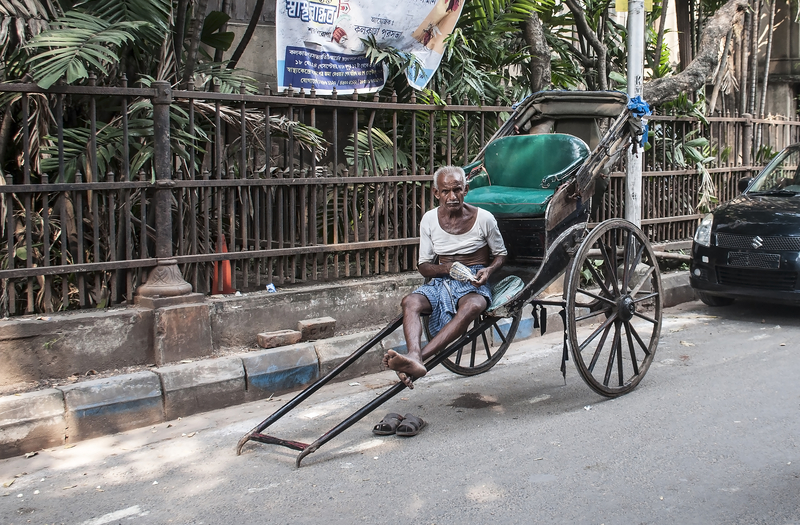
When I limped out onto the street, I was close to tears because getting a cycle rickshaw to take me home at mid-day would be impossible. It was too far to walk and too close for a taxi to bother. I looked around and saw an old hand pulled rickshaw runner. He jangled his single large bell, that looked like the tiny ghungroo bells worn by classical dancers on their ankles. I hadn’t taken a hand pulled rickshaw until then, it seemed so demeaning to them. Reminders of the British Raj, still so omnipresent in Calcutta, were interrupted by a sharp twinge of pain. I grimaced.
He smiled, waving a fly from his grizzled face. “Daughter, where do you want to go?”
“BBD Bagh,” I said, “How much?”
He quoted a price. I readily agreed and clambered onto the rickshaw, landing with a thump on the seat as I thanked him profusely.
“I thank you,” he countered, “Not many people take our rickshaws these days, it’s my only livelihood. And many of us must give up the job.” He panted. His slow pace had picked up to a steady jog, “we barely make enough for our daily food.”
I watched his thin sinewy legs as they pumped up and down. His feet were bare and thickly calloused from years of hitting a hot tarmac.
Guilt, like a monsoon shower, washed over me when he stopped in front of my building. I wanted to make it up to him. “Where do you get your rickshaw bell?”
He laughed. “Why?”
“I want it as a souvenir,” I said.
“You can take this one,” he offered.
“How will you call your fares?” Tears of remorse pricked my eyes. “What had I done?”
“I have an extra one,” he said, pulling up the seat where I’d been sitting. Under the worn red leather cushion, he had stored his meagre belongings, an almost threadbare grey blanket, rubber slippers, an extra loincloth, and striped underwear. He pulled out the grey, aluminium bell with a leather thong strung through the hoop at the top.
“How much?” I asked. A cool breeze washed past me, a benediction, for my good deed? It cooled the perspiration around my neck.
He laughed, a few teeth were missing, the rest stained red-black with betel juice. His dark sun beaten face and grey beard were almost demonic, but his jet eyes were gentle and the crow’s feet crinkling in amusement made me smile.
“Whatever is easy for you madam. I bought it a long time ago.”
I handed him thirty rupees, “for the fare and the bell.”
“Madam, it’s too much.” His jet eyes glistened with emotion.
“From the baby and me,” I whispered, “Give me a blessing.”
“Of course, of course”, he said coughing up phlegm which he spat into the street. That was Calcutta. “Live long, daughter, bless you and the baby.”
‘May it be normal,’ I say in my mind. It’s the closest I’ve come to praying in nearly twenty years.
I put the bell into my handbag which I slung over my shoulder. Then, holding my belly under my shawl, I climbed the steps to the door, pushed past it into the cool dark foyer. I pressed the button for the old black wrought-iron lift that clanked on its way down.
I felt lightheaded when I got home and lay down as the various helpers got me water, tea, and turned on the fan.
When I awoke, I was being rushed on a stretcher past green curtains. My doctor and an elderly lady anaesthesiologist were rushing beside me. I wanted to ask, “what happened?” but my tongue was stuck to my palate, and I couldn’t get any words out. I knew where I was. Had I fainted? Where was my husband? I was in pain; his hand was on my arm. “It’s all ok”. His voice was husky.
I slept again. Jagged neon lights slashed my abdomen. Pethidine. Is my baby ok? In the early morning dark, tears burnt my eyes. Until the previous afternoon when I bought the rickshaw puller’s bell, I had abandoned God and prayer.
I tried to say, “Our Father…” but it stuck in my throat. I demanded of Him, “Give me my baby whole and complete, and I’ll return.” It was a promise. A challenge. Not a prayer.
“Your baby,” the nurse said, and I took the little girl in my arms. She had a shock of thick black soft hair. I put her to my breast, she sucked hard at my nipple. Her will to live hurt. I examined her fingers, toes, face. She was perfect.
I reached in my handbag for a tissue and felt the rickshaw puller’s bell, “Your birthday blessing,” I whispered.
A pink dawn cracked the sky. I looked heavenward, “Thank you.”
(*Macher Jhol – Fish curry)



How fast this dance of life does go!
Our heart beats race against our breaths
Who set the beat, this mad tempo?
Like autumn winds we madly blow
Through time and life until our deaths.
How fast this dance of life does go!
We dream, we hope, we tell, we show!
We dance, we flail, out of our depths
Who set the beat, this mad tempo?
We waltz, at double time we go!
Stepped in as deep as did Macbeth,
How fast this dance of life does go!
Through smiles and tears we do not know
The meaning of this shibboleth
Who set the beat, this mad tempo!
We seize the day, our hearts beat so
Much faster as we near our death
This dance of life so fast it goes
We get the beat, its mad tempo.
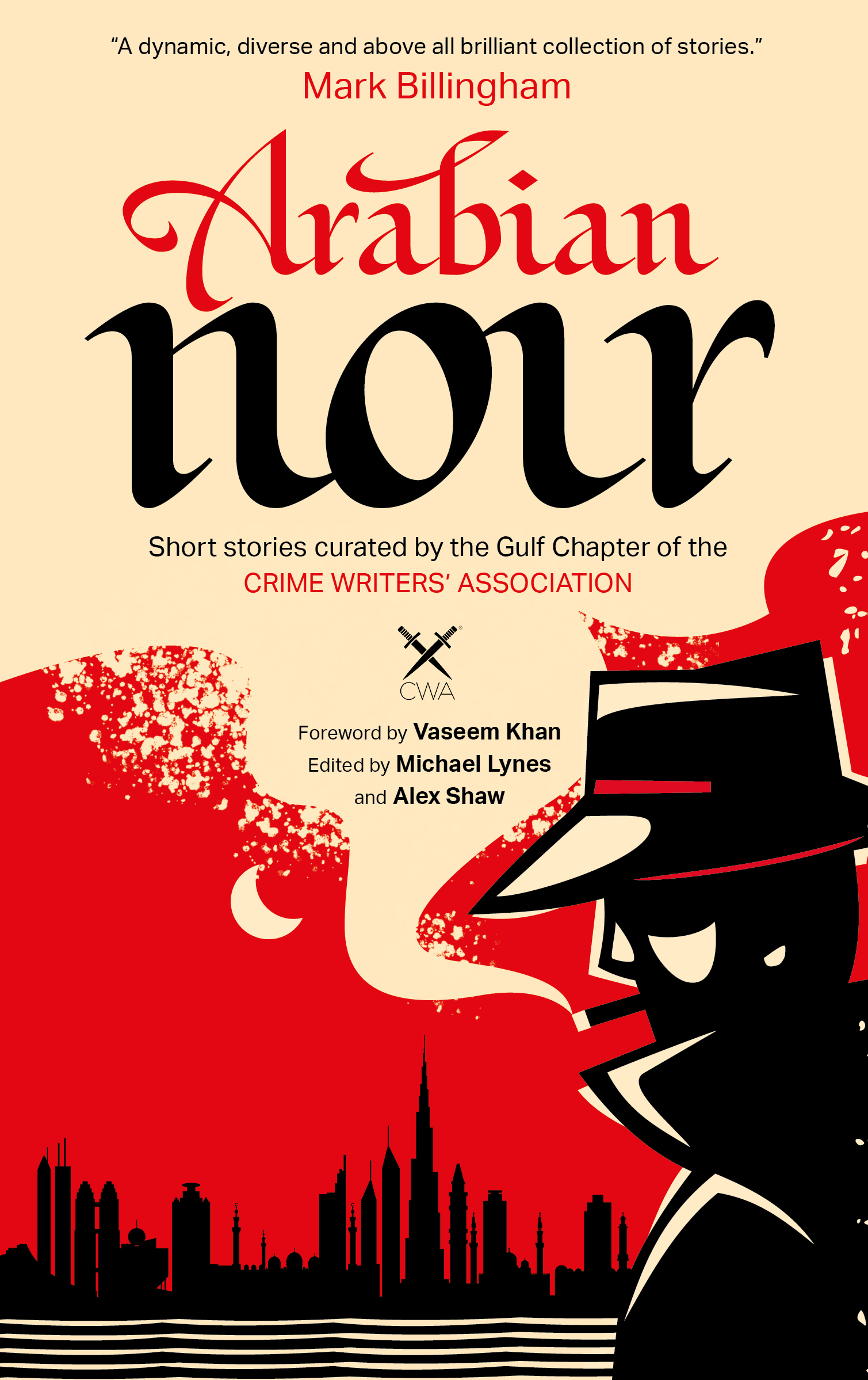
I read sporadically. So, it’s been a while since I picked up Arabian Noir again. (I’m simultaneously reading Mohammed Hanif’s Our Lady of Alice Bhatti).
I am now reading this collection in chronological order. The first story is titled The Reddest Dress. It’s both a glimpse of the life of expats who work at or in unglamorous jobs in Dubai as well as those high-flyers we keep reading about in the rare upper echelons of Dubai’s glitterati.
“The glint of her diamond ring is razor sharp.” Writes Sara Hamdan in the opening paragraph. This hint of Sara’s sharp wit and insight sets the mood for the rest of this gripping tale.
You feel for the protagonist, a hairdresser in a salon, as the lack of a tip means she must take a bus instead of splurging on the luxury of a cab. When she gets home, her careful roommate Elisabetta is going out on a date to an expensive hotel wearing the latest designer dress. Elisabetta has just received an expensive, genuine Chanel purse from her boyfriend. She also shows off her her latest acquisition, this ‘reddest of red dresses’. Our heroine is mesmerised by the dress.
You are swept up by its magical hold on her. She wears it. Goes to an expensive restaurant, jumps the queue, all thanks to this extravagant designer red dress. She meets a charming German and then comes face-to-face with her salon client … that’s when things rapidly start to unravel.
There is a heart-pounding dash to the end of the story… But, you know, you just have to read it!
‘Members of the jury, I have your note indicating that you have reached a verdict. Will the Clerk of the Court please take the verdict?’ ‘Mr. Foreman, has the jury agreed upon a verdict?’ ‘They have.’ ‘As to the count of murder in the first degree what is the jury’s verdict? ‘Guilty!’
Today I received my copy of Arabian Noir, the anthology that features my first crime story set in the Middle East. I rushed through the contents to read my friend Glen R Stansfield’s story: Footnote. As expected, it was Glen’s usual slow-burn thrill, with realisation and things clicking into place at the end of the tale.
Pardon my cliché, but this story truly was a page-turner. I absolutely had to know how it ended. I suspect every story in the collection will serve up its own brand of hair-raising tales. I am looking forward to reading them all. With titles like The Reddest Dress by Sara Hamdan, Dubai Heat by Alex Shaw, Jack and the Box by S.G. Parker this promises to be one screaming-in-my-head adventure.
More soon. Or get your copy today!
… and finally, if it stands up to scrutiny your story will find a home.
A story I’d written a long time ago and submitted over and over again through several rejections has been accepted for publication by The Missouri Review . It will appear in their Fall edition, in print, digitally, and audio. I have also been granted the honour to have it included (ahead of publication) in their annual anthology.
This has meant a lot to me on several different levels: an endorsement that what I knew deep down was not only well-written but also a good story. It’s also a re-affirmation of the age-old adage ‘try, try, try, again’.
Come Fall it shall be available for all of you to read. Watch this space, I shall announce it!
A special shout out to friends in the BWC (Bahrain Writers’ Circle), Lynda Tavakoli (your appreciation of it gave me the courage to submit) Glen R Stansfield (for introducing me to Allison – who, with a few tweaks, took it to another level), family members who read it and liked it: Mridula Singha!
Thanks everyone!
After their acceptance, I googled The Missouri Review, and they’re among the top 50 literary magazines in the world! Success is sweet.
Thanks also to Monisha Gumber and her YouTube Channel Vachi Audiobooks, for giving me enough practice in presenting my own stories’ audio versions, that I had the confidence to do this for TMR.
And other stories from Twelve Roses for Love
It took me a while to pick up the courage to narrate the stories for the audio versions of Twelve Roses for Love. I must thank Monisha Gumber for giving me the opportunity, in the first place to even consider doing audio versions of the stories, and in the second to encourage me to “go for it” and do the narration.
After a few tries, the first story I narrated was La Blue Luncheonette. I thought the whole thing had to be done in one “take”. So, I sat down with a glass of water and after a few tries I got it all into one continuous recording. Phew! It was only after she complimented me on, “doing it all in one go,” did I realise that I didn’t have to.
When it came to narrating Hearts for Valentine, I was much more at ease about the mechanics of the recording. However, the story is a bit of a tear-jerker and I worried that I might break down while narrating it.
I must confess that while doing the recording I did succumb to the words and the emotion of the moment (isn’t that what method actors do?). But… technology to the rescue! I stopped. Got my emotions under control. Used a few handy tissues. Had another sip of water and carried on. The audio expert who puts the visual and audio versions together has the necessary equipment to fix these stumbles and I think we have a good smooth rendition.
We have chosen several stories from the collection but haven’t translated all of them into audio versions. If you like these stories, I think you’ll thoroughly enjoy the others in the book. Trust me, although this is a collection of tales centred around the theme of love, they aren’t all about romantic love, there’s even one in there that I think will have you holding your sides laughing!

When old friends get together, after an hour or two of reminiscing it is often that we start to share stories. If it’s one of those cool evenings with a long twilight and bats swooping in the darkening sky and the occasional hoot of an owl or the high-pitched scratchy sound of locusts or other night creatures, how many of us turn to tales of the supernatural?
Well, this is what happened many years ago at an old school reunion. This is the story shared by a friend. He says it happened to him. I believe him. Do you? The Guesthouse Ghost
 FictionPals